Reducing Operational Costs with ARB Conveyors in Distribution Centers

Optimizing Conveyor Chain and Sprocket Alignment
May 3, 2025
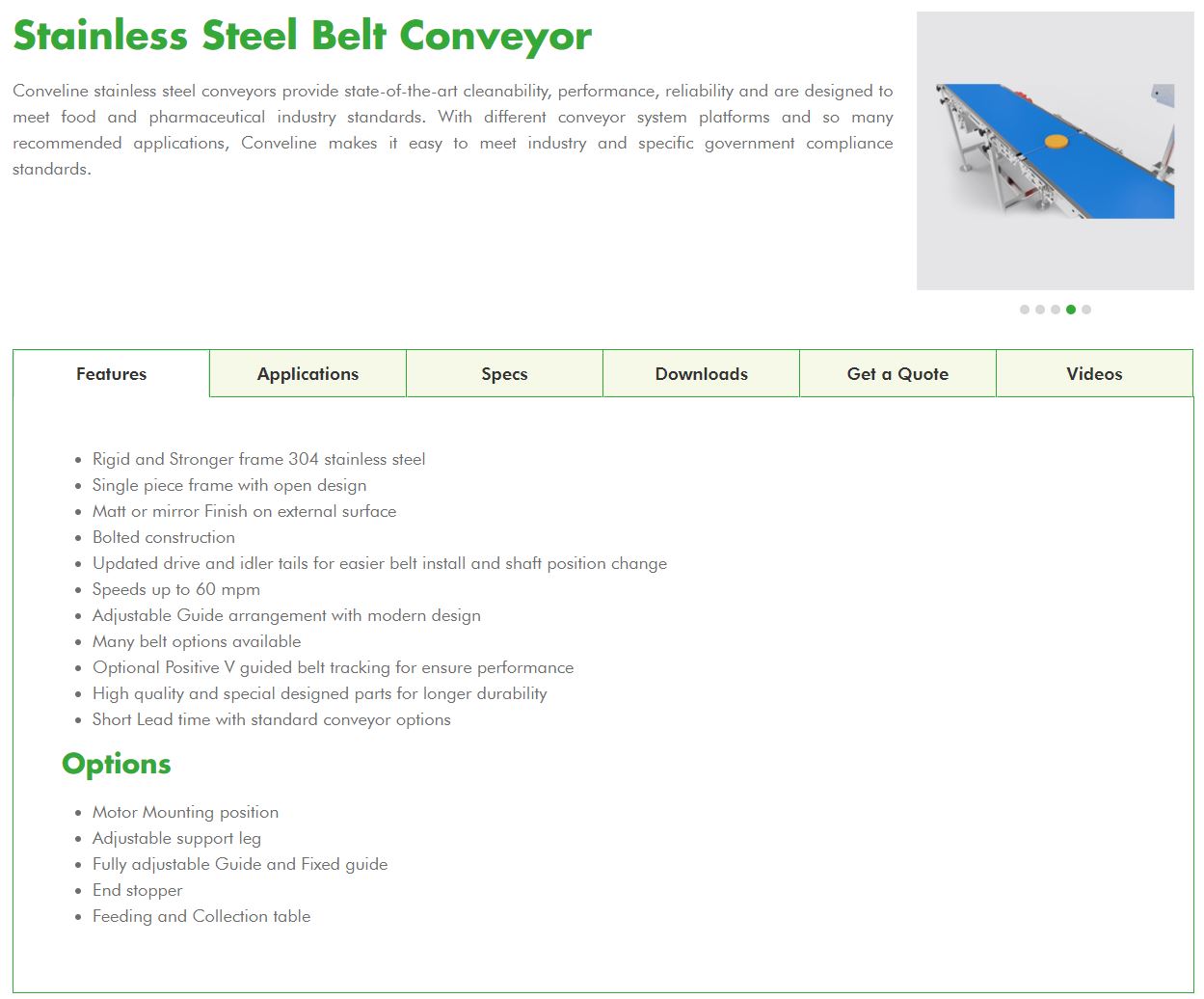
Use of Stainless Steel Food Conveyors in Sanitary Applications
June 3, 2025
Operational costs in distribution centers often rise due to frequent maintenance, manual sorting, and poor space use. These issues lead to delays and long-term expenses. Choosing the right conveying solution helps address these problems directly.
ARB conveyors, a type of custom automation conveyor, are well-suited for distribution environments where flexibility, precision, and reliability are necessary.
These conveyors use Activated Roller Belt (ARB) technology to manage merging, sorting, turning, and alignment. Fewer moving parts and reduced mechanical strain help lower maintenance needs and reduce reliance on manual handling.
Cost-Saving Features of ARB Technology Conveyors
Labour and maintenance account for a large portion of operating budgets in distribution environments. ARB technology conveyors help reduce both.
- Lower maintenance needs: With fewer belts, motors, and contact points, ARB conveyors experience less mechanical wear. This reduces service frequency, cuts down on unexpected breakdowns, and extends the system’s lifespan.
- Reduced labour involvement: Built-in features such as passive rollers and directional control allow products to move, sort, and align without manual input. This decreases the number of staff required on the floor, cutting labour costs and reducing the risk of handling errors.
- Compact layouts: The design supports turning, merging, and transferring on a single platform. This allows operations to run multiple processes in confined spaces, helping businesses avoid expensive layout changes or facility expansions.
- Energy use reduction: The low-friction design reduces motor load and energy consumption during continuous use. Over time, this leads to noticeable savings on power bills and lowers overall operating costs.
These systems stay functional and cost-effective over time by focusing on dependable mechanics.
ROI Analysis: Long-Term Savings and Productivity Gains
Distribution centers that adopt ARB conveyors often see results within the first year. These systems simplify workflows, shorten order cycle times, and reduce staff dependency during peak hours.
Over 24 months, most savings emerge in these areas:
- Fewer emergency repairs or unplanned shutdowns: With fewer moving parts and lower wear, breakdowns are less frequent. This reduces repair costs and keeps production schedules on track.
- Less reliance on short-term labour or temporary hires: Built-in handling and sorting functions reduce the need to scale up headcount during busy periods.
- Improved floor productivity through uninterrupted movement: Fewer halts and more controlled flow allow for easier transitions between sorting, packing, and staging.
- Lower training costs: With fewer operators required and simpler controls, training time and resources are minimized, especially valuable when onboarding new staff.
- Longer equipment life: The modular design and durable components of ARB technology conveyors reduce the need for early replacements. Their long lifespan also reduces capital spending on future replacements or upgrades. For growing facilities, this stability allows for expansion planning without revisiting the layout foundations.
Custom-Built Conveyors as a Strategic Investment
Reducing operational costs requires choosing systems that align with current output needs and future plans. That’s why distribution centers are investing in custom-built conveyors that match their product types, order volumes, and available space.
CONOVEY builds every system based on a clear understanding of site requirements. The approach combines practical design with real-world performance, from small-scale sortation lines to large-scale handling setups.
To learn how our custom-built conveyors can reduce operating costs in distribution centers, contact CONOVEY today!


- Various Drive Options
- Tapered Rollers also available
- Optional Polyurethane sleeving
- Variable speed is standard
- Safe low voltage & wide range of speeds
- 1201/1202 | Belt Rollers, Single or Double Groove Light/Medium Duty Conveyors Rollers, Custom Made Grooves | ⌀50mm Roller | ⌀11mm, ⌀14mm Shafts
- 1203 | Belt Pulley Rollers, Light/Medium Duty Conveyor Rollers | ⌀50mm Roller | ⌀11mm, ⌀14mm Shafts
- Suitable for wide range of application for Buffer or accumulation require
- Single drive with start/stop application suitable
- Single or double 14 teeth x 1/2” sprockets can be fitted (choice of steel or nylon sprockets)
- Mild steel and stainless steel options
- Stainless steel options available for all fixed driven conveyor rollers
- 1301/1302 | Polymer sprocket rollers, single or double sprocket, low running noise, polyamide bearing housing | 50mm Dia | ⌀14mm Shaft
- 1303/1304 | Steel sprocket, single or double sprocket, polyamide bearing housing | ⌀50mm Roller | ⌀14mm Shafts
- 1305/1306 | Steel sprocket, adjustable torque, single or double sprocket, polyamide/steel bearing housing | ⌀50mm, ⌀60mm, ⌀76 mm Rollers | ⌀14mm, ⌀15mm, ⌀20mm Shafts
- 1201/1202 | belt rollers, single or double groove light/medium duty conveyor rollers, custom made groove | ⌀50mm Roller | ⌀11mm, ⌀14mm Shafts
- 1203 | Belt Pulley Rollers, Light/Medium Duty Conveyor Rollers | ⌀50mm Roller | ⌀11mm, ⌀14mm Shafts
- Single and Double Grooves option
- Light and medium duty driven roller fitter with nylon O ring sprocket
- Line-shaft and 24V DC motorized rollers conveyors
- Mild steel, stainless steel and plastic options
- Stainless steel options available for all fixed driven conveyor rollers
- Free running bearings
- Wide range of tube and shaft options
- Wide range to handle from 100gm to 500kg per roller capacity
- Mild steel, stainless steel and plastic options
- Our most economical price rollers
- 1101 | PVC tube, polyamide bearing housing, light duty conveyor rollers | ⌀25mm, ⌀38mm, ⌀50mm Rollers | ⌀10mm, ⌀12mm Shafts
- 1102 | Light and medium duty universal conveyor rollers, polyamide bearing housing | ⌀25mm, ⌀38mm, ⌀50mm, ⌀76mm, ⌀89mm Rollers | ⌀14mm, ⌀20mm Shafts
- 1103 | Gravity conveyor rollers, steel bearing housing | ⌀50mm, ⌀76mm, ⌀89mm Rollers | ⌀14mm, ⌀20mm Shafts
- 1201/1202 | belt rollers, single or double groove light/medium duty conveyor rollers, custom made groove | ⌀50mm Roller | ⌀11mm, ⌀14mm Shafts
- 1203 | Belt Pulley Rollers, Light/Medium Duty Conveyor Rollers | ⌀50mm Roller | ⌀11mm, ⌀14mm Shafts
- 1204 | Poly V belt pulley rollers, medium duty and high speed conveyor rollers | ⌀50mm Roller | ⌀11mm, ⌀14mm Shafts
- 1205 | Timing belt pulley rollers, medium duty and high speed conveyor rollers | ⌀50mm Roller | ⌀11mm, ⌀14mm Shafts
- 1206/1207 | Polymer sprocket rollers, single or double sprocket, medium duty and low running noise, polyamide bearing housing | ⌀50mm Roller | ⌀14mm Shafts
- 1208/1209 | Steel sprocket, single or double sprocket, medium/heavy duty conveying application, polyamide bearing housing | ⌀50mm, ⌀60mm, ⌀76mm Rollers, ⌀89mm Roller | ⌀14mm, ⌀15mm, ⌀20mm Shafts
- 1210/1211 | Steel sprocket, steel bearing housing, heavy duty conveying, strong and reliable | ⌀50mm, ⌀76mm, ⌀89mm Rollers | ⌀14mm, ⌀15mm, ⌀20mm Shafts
- Free running option for gravity roller conveyors.
- All tapered conveyor rollers have a sealed bearing option for wash-down areas
- 50mm diameter base roller can be grooved for line-shaft conveyors
- Tapered sleeve rollers to suits an inside radius of 500mm to 1200mm
- Single or double 14 teeth x 1/2” sprockets can be fitted (choice of steel or nylon sprockets)
- Mild steel and stainless steel options
- Stainless steel options available for all fixed driven conveyor rollers
- 1401 | Gravity tapered roller, attractive look and low noise | ⌀53mm, ⌀56mm, ⌀50mm Rollers | ⌀12mm, ⌀14mm Shafts
- 1402 | belt drive, Double grooved tapered sleeve roller, customized groove position | ⌀53mm, ⌀56mm, ⌀50mm Rollers | ⌀14mm Shaft
- 1403 | belt pulley drive, Double grooved O belt pulley tapered sleeve roller | ⌀53mm, ⌀56mm, ⌀50mm Rollers | ⌀14mm Shaft
- 1404 | Poly vee belt pulley drive tapered sleeve roller, high speed, low noise | ⌀53mm, ⌀56mm, ⌀50mm Rollers | ⌀14mm Shaft
- 1405 | Polymer sprocket drive tapered sleeve roller, medium duty, low noise | ⌀53mm, ⌀56mm, ⌀50mm Rollers | ⌀14mm Shaft
- Widths | 250mm, 350mm, 450mm, 650mm, 850mm |
- Lengths | 500mm, 1000mm, 1500mm, 2000mm, 2500mm |
- Max Pallet/Carrier Wgt (kg) | 50kg/250kg |
- Pallet Sizes | 238X306, 332X430, 428X550, 522X670 |
- Height Range | 500mm - 1000mm |
- Load Accuracy | +/-0.5mm Stop Unit | +/-0.1mm Locating Pin | +/-.05mm Lift & Locate |
- Roller Pitch | 82.5mm, 127mm, 150.8mm |
- Roller ⌀ | 50mm, 76mm |
- Max Length per Drive | 7500mm |
- Drive Motor Size | .5HP, 1HP | SEW |
- Drive Speeds | 2-24 mpm
- Frame Materials | Aluminum or Powder Coat Mild Steel
- High energy efficiency level with different load application
- Safe, affordable operation without the need for guarding
- Tight positioning tolerances thanks to high precision guide rails
- Active braking and lifting of the Pallets
- Unlimited zero pressure accumulation of Pallets
- Flexible speeds from 0.2 to 24m/min between communication points
- Constant 24V auxiliary power available for energy Saving
- Very limited preventative maintenance required
- No track maintenance due to no moving parts in the track
- Very low noise level, less than 60db(A)
- Easy tracking of the Carts/parts throughout the layout
- Highly standardized components
- Significantly reduced wiring and commissioning time
- Low profile for easy part access around the line
- Tip protection for overhanging loads optionally available
- Adaptable pallet length to fit the size of your part