Frequently Asked Questions
1What types of conveyor systems does Conovey offer?
Conovey designs and supplies spiral, sanitary, accumulation, transfer, and material handling conveyors, plus components. It also represents QC Conveyors, Dorner, Hairise, GurkiPack, and LiftVrac across North America for industrial manufacturing and logistics applications.
2How does Conovey design custom conveyor systems?
Conovey engineers custom conveyor systems using detailed 3D CAD models shared with customers. This collaborative design process improves accuracy, speeds approvals, reduces installation risk, and ensures optimized layouts for food, packaging, and material handling facilities.
3Why do companies choose Conovey as their conveyor partner?
Companies choose Conovey for its 93% customer retention rate, transparent communication, and engineering expertise. A Slack-based workflow enables real-time collaboration, faster decisions, and reliable conveyor project delivery for long-term operational success.
4What industries in Canada does Conovey serve with conveyor solutions?
Conovey serves Canadian industries including food and beverage processing, packaging, warehousing, logistics, and general manufacturing, delivering conveyor systems engineered for sanitation, efficiency, scalability, and long-term operational reliability.
5How does Conovey ensure accuracy and efficiency in conveyor projects?
Conovey ensures accuracy by producing ultra-detailed 3D CAD models for every conveyor project, enabling customers to review layouts, validate performance, and address design challenges before fabrication or on-site installation begins.
6What is a spiral conveyor, and when should you use one?
A spiral conveyor is a space-saving vertical conveying solution used for moving products between different elevations. It is ideal for facilities with limited floor space, such as food processing plants and warehouses, where efficient vertical transport and continuous product flow are essential.
7What are sanitary conveyors, and why are they important in food processing?
Sanitary conveyors are designed with hygienic materials and easy-to-clean structures to meet strict food safety standards. They help prevent contamination, reduce downtime during cleaning, and ensure compliance with regulations in the food, beverage, and pharmaceutical industries.
8How do accumulation conveyors improve production efficiency?
Accumulation conveyors allow products to queue or buffer along the line without stopping upstream production. This reduces bottlenecks, prevents product damage, and ensures smoother workflow across packaging and processing operations.
9What factors should you consider when choosing a conveyor system in North America?
Key factors include product type, throughput requirements, available space, sanitation needs, and integration with existing equipment. Businesses in North America should also consider compliance standards, long-term maintenance, and supplier support when selecting a conveyor system.
10Does Conovey support installation and after-sales service for conveyor systems?
Yes, Conovey supports clients beyond design and manufacturing by assisting with installation coordination and ongoing service needs. This ensures smooth system integration, minimal downtime, and long-term operational performance for conveyor systems.
11What industries commonly use spiral conveyor systems?
Spiral conveyor systems are widely used in food processing, packaging, manufacturing, warehousing, e-commerce, pharmaceuticals, and logistics facilities where vertical product movement is required within a smaller footprint.
These systems help move cartons, packages, containers, and products between multiple floor levels while maintaining continuous product flow. Spiral conveyors are commonly selected when facilities need to maximize production space without expanding the building footprint.
These systems help move cartons, packages, containers, and products between multiple floor levels while maintaining continuous product flow. Spiral conveyors are commonly selected when facilities need to maximize production space without expanding the building footprint.
12What is the difference between sanitary conveyors and standard conveyors?
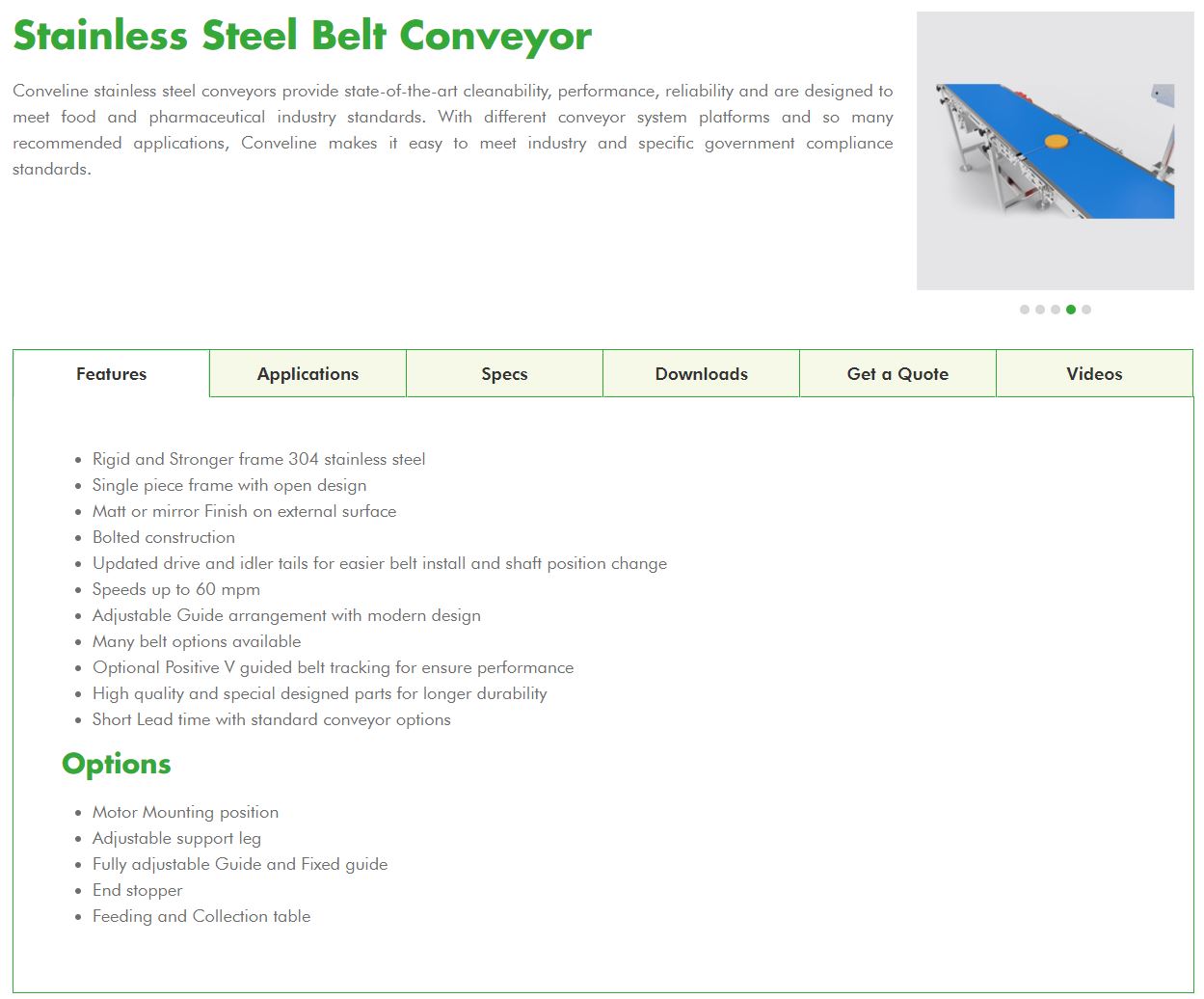
Sanitary conveyors are specifically designed for environments that require strict hygiene and washdown procedures, such as food processing, beverage production, pharmaceuticals, and clean manufacturing operations.
Unlike standard conveyors, sanitary conveyor systems use hygienic construction methods, easy-to-clean surfaces, corrosion-resistant materials, and open-frame designs that simplify cleaning and reduce contamination risks.
Unlike standard conveyors, sanitary conveyor systems use hygienic construction methods, easy-to-clean surfaces, corrosion-resistant materials, and open-frame designs that simplify cleaning and reduce contamination risks.
13What are the benefits of modular conveyor systems in manufacturing facilities?
Modular conveyor systems allow manufacturers to expand, reconfigure, or modify conveyor layouts more easily as production requirements change. This flexibility is useful for facilities handling multiple product lines, seasonal production changes, or future automation upgrades.
Many modular conveyor systems also reduce installation time, simplify maintenance access, and support faster equipment integration across packaging, assembly, and material handling operations in Canadian manufacturing environments.
Many modular conveyor systems also reduce installation time, simplify maintenance access, and support faster equipment integration across packaging, assembly, and material handling operations in Canadian manufacturing environments.
14Why are 3D CAD models important in conveyor system design?
3D CAD models allow manufacturers and facility teams to visualize conveyor layouts before fabrication and installation begin. Detailed models help identify spacing conflicts, optimize workflow, improve equipment placement, and reduce installation issues during project execution.
For larger conveyor projects, CAD-based planning also helps streamline communication between engineering teams, contractors, and production managers throughout the design process.
For larger conveyor projects, CAD-based planning also helps streamline communication between engineering teams, contractors, and production managers throughout the design process.
15How do businesses choose the right conveyor system for material handling?
The right conveyor system depends on several operational factors, including product type, available floor space, production speed, sanitation requirements, product weight, and facility layout.
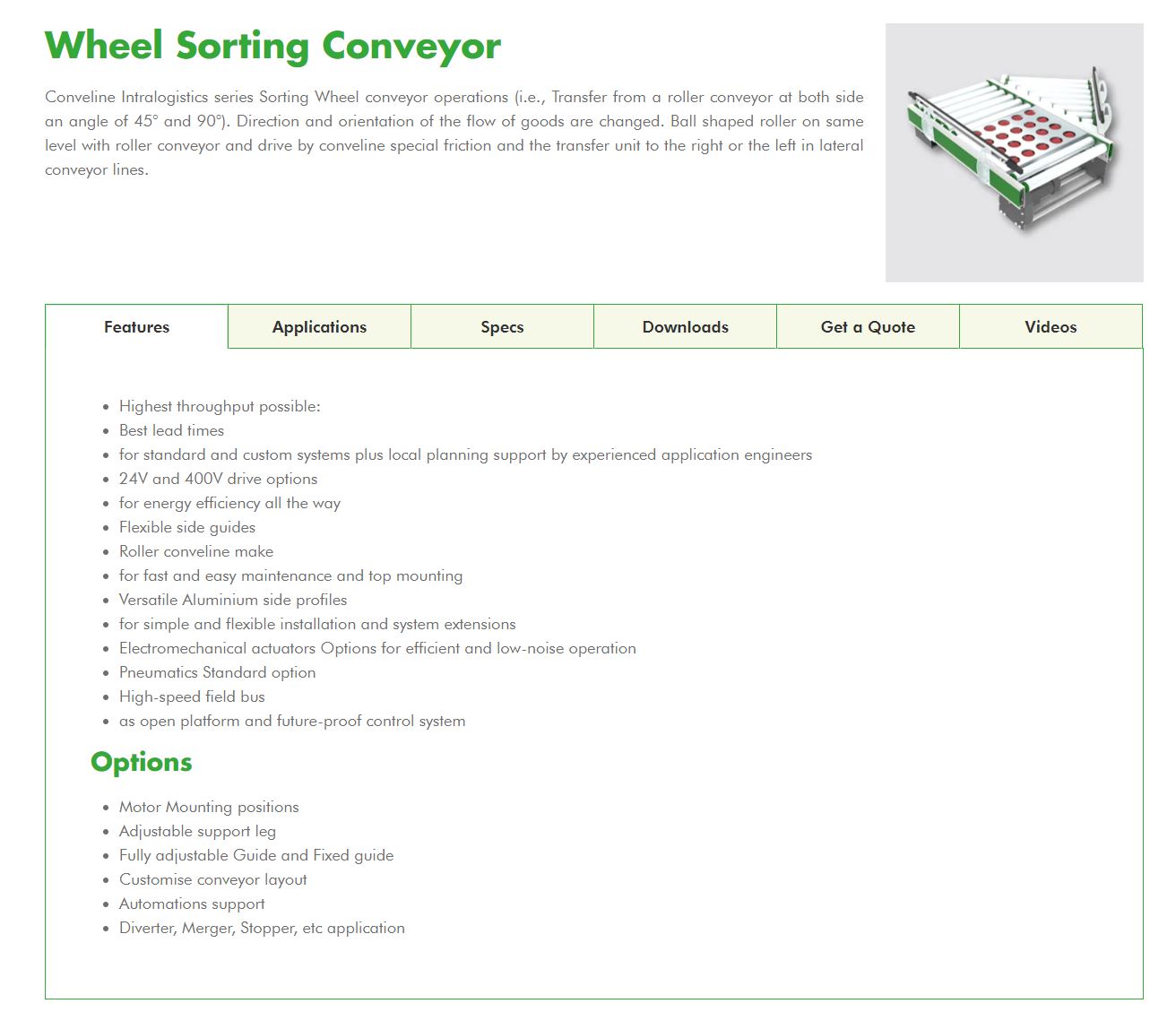
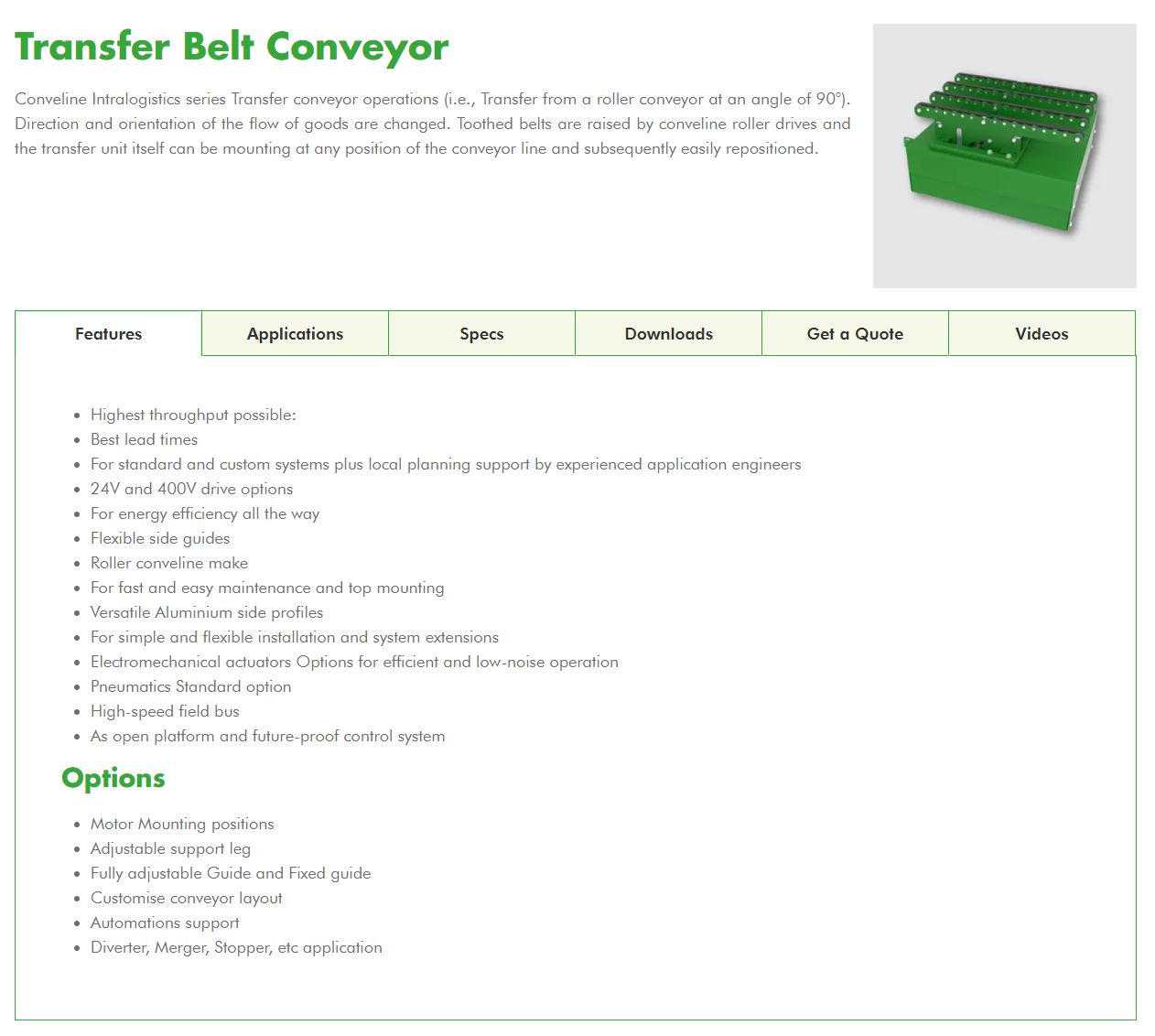
Manufacturers often evaluate whether they need spiral conveyors, transfer conveyors, sanitary conveyors, or modular systems based on how materials move through packaging, assembly, or distribution processes. A conveyor system assessment can help determine the most suitable configuration for long-term operational performance.
Manufacturers often evaluate whether they need spiral conveyors, transfer conveyors, sanitary conveyors, or modular systems based on how materials move through packaging, assembly, or distribution processes. A conveyor system assessment can help determine the most suitable configuration for long-term operational performance.
16How do I know when a conveyor system is limiting production efficiency?
Production bottlenecks often appear as product accumulation, inconsistent throughput, excessive manual handling, or recurring downtime around transfer points. A conveyor assessment can identify areas where automation, layout improvements, or equipment upgrades may improve material flow, reduce labor requirements, and increase overall production efficiency.
17What factors should be considered when selecting a conveyor for food processing applications?
Food processing conveyors should be evaluated based on sanitation requirements, product characteristics, washdown procedures, operating temperatures, and production volume. Conveyor design, cleanability, material selection, and integration with existing processing equipment all play important roles in maintaining product quality and operational performance.
18Can an existing conveyor line be upgraded instead of replaced?
In many cases, existing conveyor systems can be modified with new components, controls, automation features, or line extensions rather than being fully replaced. The feasibility depends on equipment condition, production goals, safety requirements, and compatibility with newer technologies. An assessment can determine whether upgrades provide a cost-effective path to improved performance.
19How can conveyor automation help reduce labor challenges in manufacturing facilities?
Automated conveyor systems can reduce repetitive manual handling tasks, improve product movement consistency, and support higher throughput with fewer touchpoints. By automating material flow between production stages, manufacturers can improve productivity while reducing reliance on manual transportation and sorting activities.
20What are the advantages of working with a conveyor supplier that offers both equipment and integration support?
A conveyor supplier with integration expertise can assist with equipment selection, system layout, controls integration, installation planning, and long-term optimization. This approach helps ensure that conveyor equipment functions as part of a complete material handling strategy rather than as a standalone component, supporting smoother implementation and operational performance.