What Is a Flat Belt Conveyor? Key Advantages and Common Industrial Uses

How to Choose Conveyor Components for Your Specific Industry Application
October 8, 2025
Top Types of Transfer Conveyors for Automated Production Lines
October 22, 2025
Efficient product movement defines the rhythm of any manufacturing or packaging operation. Among the various conveyor types designed for modern production lines, the flat belt conveyor stands out as one of the most versatile and dependable options. Its simple yet robust design allows it to transport products of varying sizes, weights, and shapes with consistent precision, making it indispensable across industries such as food processing, automotive, pharmaceuticals, and logistics.
Whether used as a standalone system or integrated with other conveyor types, flat belt systems provide the foundation for smooth material flow. From assembly lines to quality inspection stations, this conveyor type offers unmatched consistency and adaptability. With advancements in engineering and material design, modern flat belt systems continue to meet the increasing demands of automation and efficiency in industrial environments.
Understanding What a Flat Belt Conveyor Is
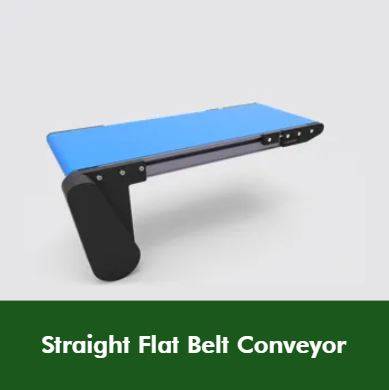
A flat belt conveyor is a continuous loop system that utilizes a flat, surface-belt made from rubber, PVC, or fabric to transport goods from one point to another. It operates on a series of pulleys that maintain belt tension and ensure smooth movement along a horizontal or inclined path. The design’s simplicity makes it ideal for a wide range of operations, from small component transfer to bulk material handling.
Unlike specialized systems such as the retractable conveyor or tabletop chain conveyor, a flat belt design offers a universal solution for linear product transfer. It’s particularly effective in industries that require reliable, clean, and gentle handling of materials.
How Flat Belt Conveyors Work
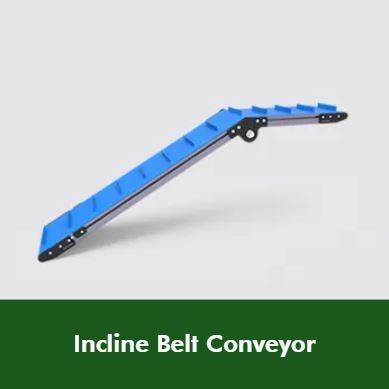
The working principle of a flat belt conveyor revolves around two key pulleys—one for driving the belt and the other for maintaining tension. A motor powers the drive pulley, which moves the belt and transports materials placed on its surface. Depending on the operational setup, these conveyors can be configured for horizontal, incline, or decline movement.
The smooth belt surface ensures minimal friction, reducing wear and noise during operation. Many systems can also be customized with accessories, such as side rails, speed controls, and accumulation zones, to enhance functionality and efficiency.
Key Advantages of Flat Belt Conveyors
The flat belt conveyor offers several operational advantages that make it a mainstay in industrial facilities:
- Versatility: Capable of handling a variety of materials, including boxes, packaged goods, and bulk items.
- Smooth and Quiet Operation: Offers stable movement with minimal vibration and low noise levels.
- Clean Handling: Ideal for sanitary applications, particularly in food and pharmaceutical environments.
- Ease of Maintenance: Simple structure allows for quick cleaning and belt replacement.
- Flexible Integration: Can be easily paired with other systems, such as retractable and modular conveyors.
These attributes make the flat belt system one of the most widely adopted conveyor types for continuous and efficient material transport.
Common Industrial Applications of Flat Belt Conveyors
From light assembly lines to large-scale logistics centers, the flat belt conveyor is used wherever consistent product flow is essential. Common applications include:
- Food Processing: Hygienic belts and stainless-steel frames for sanitary compliance.
- Automotive Manufacturing: Transporting components between workstations.
- Pharmaceutical and Packaging: Precise and contamination-free product movement.
- Warehousing and Distribution: Reliable product sorting and transfer operations.
Its adaptability allows it to fit seamlessly into diverse layouts, whether as a straight-line conveyor or as an integrated component of complex automated systems.
Design Considerations When Selecting a Flat Belt Conveyor
Selecting the right flat belt system involves evaluating operational parameters such as load type, belt material, incline angle, and required speed. Environmental factors like humidity, temperature, and chemical exposure must also be considered to ensure durability. For industries handling fragile products, low-friction and anti-static belts are often preferred to prevent product damage and contamination.
Why Work with a Trusted Conveyor Manufacturer
The performance and longevity of a flat belt conveyor depend on the engineering precision behind it. Partnering with a reputable manufacturer ensures access to high-quality materials, design customization, and technical support throughout the system’s lifecycle. A trusted partner also ensures compliance with hygiene, safety, and performance standards relevant to each industry.
Flat Belt Conveyors—A Reliable Solution for Every Industry
Whether it’s a retractable conveyor for space optimization, a tabletop chain conveyor for heavy-duty applications, or a flat belt conveyor for smooth transport, every system plays a vital role in optimizing production efficiency. For facilities seeking precision-built, custom-built conveyors designed to match operational demands, Conovey delivers engineering excellence with a focus on performance, safety, and durability.
Contact Conovey today to learn more about tailored conveyor solutions that streamline operations and enhance material handling efficiency across industries.


- Various Drive Options
- Tapered Rollers also available
- Optional Polyurethane sleeving
- Variable speed is standard
- Safe low voltage & wide range of speeds
- 1201/1202 | Belt Rollers, Single or Double Groove Light/Medium Duty Conveyors Rollers, Custom Made Grooves | ⌀50mm Roller | ⌀11mm, ⌀14mm Shafts
- 1203 | Belt Pulley Rollers, Light/Medium Duty Conveyor Rollers | ⌀50mm Roller | ⌀11mm, ⌀14mm Shafts
- Suitable for wide range of application for Buffer or accumulation require
- Single drive with start/stop application suitable
- Single or double 14 teeth x 1/2” sprockets can be fitted (choice of steel or nylon sprockets)
- Mild steel and stainless steel options
- Stainless steel options available for all fixed driven conveyor rollers
- 1301/1302 | Polymer sprocket rollers, single or double sprocket, low running noise, polyamide bearing housing | 50mm Dia | ⌀14mm Shaft
- 1303/1304 | Steel sprocket, single or double sprocket, polyamide bearing housing | ⌀50mm Roller | ⌀14mm Shafts
- 1305/1306 | Steel sprocket, adjustable torque, single or double sprocket, polyamide/steel bearing housing | ⌀50mm, ⌀60mm, ⌀76 mm Rollers | ⌀14mm, ⌀15mm, ⌀20mm Shafts
- 1201/1202 | belt rollers, single or double groove light/medium duty conveyor rollers, custom made groove | ⌀50mm Roller | ⌀11mm, ⌀14mm Shafts
- 1203 | Belt Pulley Rollers, Light/Medium Duty Conveyor Rollers | ⌀50mm Roller | ⌀11mm, ⌀14mm Shafts
- Single and Double Grooves option
- Light and medium duty driven roller fitter with nylon O ring sprocket
- Line-shaft and 24V DC motorized rollers conveyors
- Mild steel, stainless steel and plastic options
- Stainless steel options available for all fixed driven conveyor rollers
- Free running bearings
- Wide range of tube and shaft options
- Wide range to handle from 100gm to 500kg per roller capacity
- Mild steel, stainless steel and plastic options
- Our most economical price rollers
- 1101 | PVC tube, polyamide bearing housing, light duty conveyor rollers | ⌀25mm, ⌀38mm, ⌀50mm Rollers | ⌀10mm, ⌀12mm Shafts
- 1102 | Light and medium duty universal conveyor rollers, polyamide bearing housing | ⌀25mm, ⌀38mm, ⌀50mm, ⌀76mm, ⌀89mm Rollers | ⌀14mm, ⌀20mm Shafts
- 1103 | Gravity conveyor rollers, steel bearing housing | ⌀50mm, ⌀76mm, ⌀89mm Rollers | ⌀14mm, ⌀20mm Shafts
- 1201/1202 | belt rollers, single or double groove light/medium duty conveyor rollers, custom made groove | ⌀50mm Roller | ⌀11mm, ⌀14mm Shafts
- 1203 | Belt Pulley Rollers, Light/Medium Duty Conveyor Rollers | ⌀50mm Roller | ⌀11mm, ⌀14mm Shafts
- 1204 | Poly V belt pulley rollers, medium duty and high speed conveyor rollers | ⌀50mm Roller | ⌀11mm, ⌀14mm Shafts
- 1205 | Timing belt pulley rollers, medium duty and high speed conveyor rollers | ⌀50mm Roller | ⌀11mm, ⌀14mm Shafts
- 1206/1207 | Polymer sprocket rollers, single or double sprocket, medium duty and low running noise, polyamide bearing housing | ⌀50mm Roller | ⌀14mm Shafts
- 1208/1209 | Steel sprocket, single or double sprocket, medium/heavy duty conveying application, polyamide bearing housing | ⌀50mm, ⌀60mm, ⌀76mm Rollers, ⌀89mm Roller | ⌀14mm, ⌀15mm, ⌀20mm Shafts
- 1210/1211 | Steel sprocket, steel bearing housing, heavy duty conveying, strong and reliable | ⌀50mm, ⌀76mm, ⌀89mm Rollers | ⌀14mm, ⌀15mm, ⌀20mm Shafts
- Free running option for gravity roller conveyors.
- All tapered conveyor rollers have a sealed bearing option for wash-down areas
- 50mm diameter base roller can be grooved for line-shaft conveyors
- Tapered sleeve rollers to suits an inside radius of 500mm to 1200mm
- Single or double 14 teeth x 1/2” sprockets can be fitted (choice of steel or nylon sprockets)
- Mild steel and stainless steel options
- Stainless steel options available for all fixed driven conveyor rollers
- 1401 | Gravity tapered roller, attractive look and low noise | ⌀53mm, ⌀56mm, ⌀50mm Rollers | ⌀12mm, ⌀14mm Shafts
- 1402 | belt drive, Double grooved tapered sleeve roller, customized groove position | ⌀53mm, ⌀56mm, ⌀50mm Rollers | ⌀14mm Shaft
- 1403 | belt pulley drive, Double grooved O belt pulley tapered sleeve roller | ⌀53mm, ⌀56mm, ⌀50mm Rollers | ⌀14mm Shaft
- 1404 | Poly vee belt pulley drive tapered sleeve roller, high speed, low noise | ⌀53mm, ⌀56mm, ⌀50mm Rollers | ⌀14mm Shaft
- 1405 | Polymer sprocket drive tapered sleeve roller, medium duty, low noise | ⌀53mm, ⌀56mm, ⌀50mm Rollers | ⌀14mm Shaft
- Widths | 250mm, 350mm, 450mm, 650mm, 850mm |
- Lengths | 500mm, 1000mm, 1500mm, 2000mm, 2500mm |
- Max Pallet/Carrier Wgt (kg) | 50kg/250kg |
- Pallet Sizes | 238X306, 332X430, 428X550, 522X670 |
- Height Range | 500mm - 1000mm |
- Load Accuracy | +/-0.5mm Stop Unit | +/-0.1mm Locating Pin | +/-.05mm Lift & Locate |
- Roller Pitch | 82.5mm, 127mm, 150.8mm |
- Roller ⌀ | 50mm, 76mm |
- Max Length per Drive | 7500mm |
- Drive Motor Size | .5HP, 1HP | SEW |
- Drive Speeds | 2-24 mpm
- Frame Materials | Aluminum or Powder Coat Mild Steel
- High energy efficiency level with different load application
- Safe, affordable operation without the need for guarding
- Tight positioning tolerances thanks to high precision guide rails
- Active braking and lifting of the Pallets
- Unlimited zero pressure accumulation of Pallets
- Flexible speeds from 0.2 to 24m/min between communication points
- Constant 24V auxiliary power available for energy Saving
- Very limited preventative maintenance required
- No track maintenance due to no moving parts in the track
- Very low noise level, less than 60db(A)
- Easy tracking of the Carts/parts throughout the layout
- Highly standardized components
- Significantly reduced wiring and commissioning time
- Low profile for easy part access around the line
- Tip protection for overhanging loads optionally available
- Adaptable pallet length to fit the size of your part