Use of Stainless Steel Food Conveyors in Sanitary Applications

Reducing Operational Costs with ARB Conveyors in Distribution Centers
May 27, 2025
Troubleshooting Common Issues with Conveyor Chains and Sprockets
June 16, 2025
Maintaining hygienic conditions is more than a regulatory necessity in food processing and packaging environments; it’s fundamental to operational integrity.
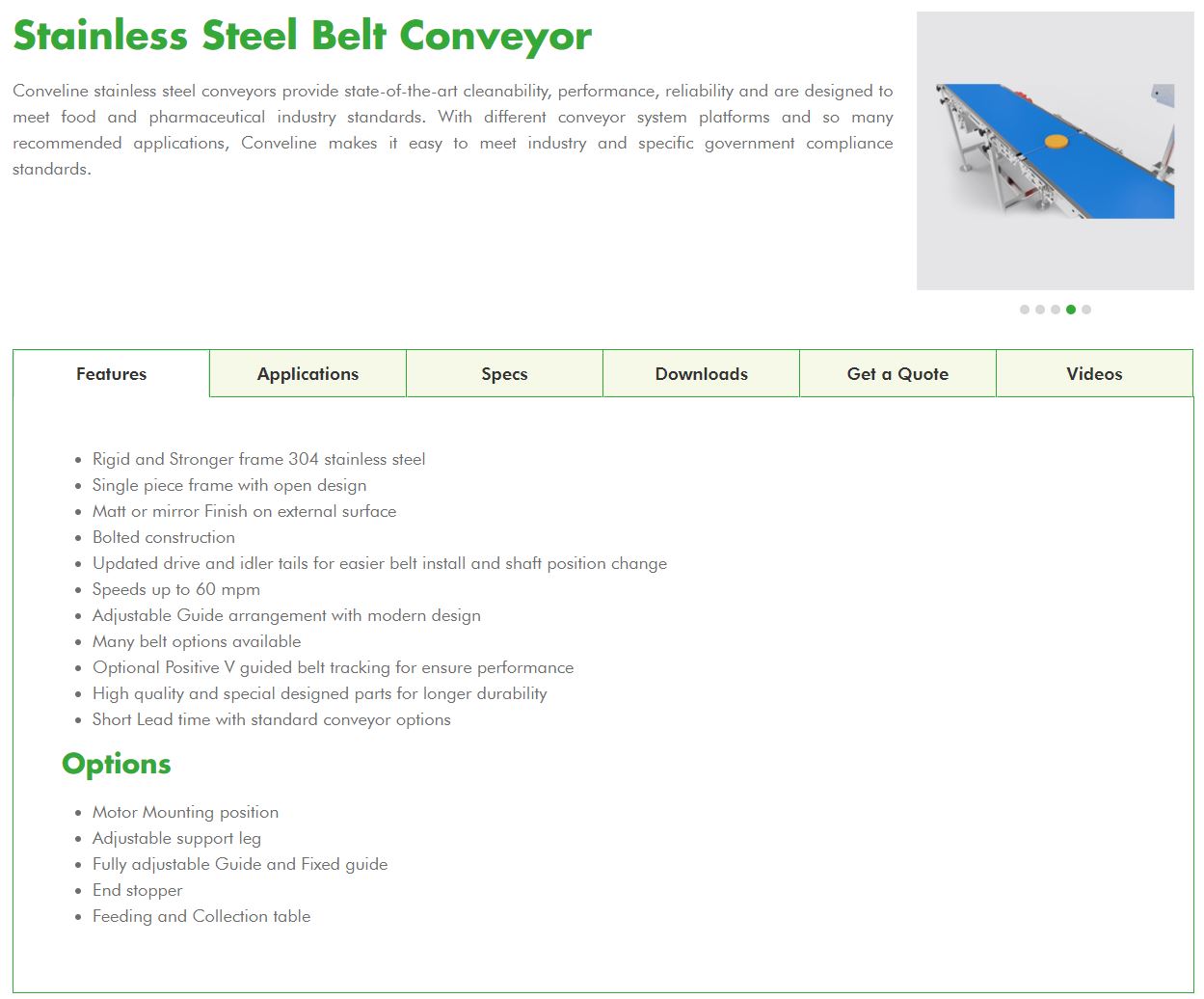
When it comes to material movement, a food packaging conveyor made of stainless steel has become the industry norm for sanitary handling. Stainless steel is naturally resistant to rust, easy to clean, and has a strong structure, which makes it perfect for handling food under strict washdown circumstances.
Companies in the US and Canada that work in food-related industries and must follow safety rules can choose stainless steel, as this material meets both safety requirements and working needs.
Sanitary Design Principles for Food Processing Environments
Food packaging conveyor solutions must follow specific design principles to reduce the risk of contamination. These include:
- Smooth, crevice-free surfaces to prevent microbial buildup.
- Open-frame construction that allows easy access for cleaning.
- Rounded edges and sealed welds to minimize accumulation points.
- Sloped surfaces that facilitate drainage during washdowns.
Together, these features support the clean structural design of the conveyor while maintaining durability for long-term use.
Industries That Rely on Stainless Steel Food Conveyors
Stainless steel food conveyors are widely adopted across industries where hygiene is non-negotiable. These include:
- Meat and poultry processing
- Dairy production
- Ready-to-eat meals and bakery lines
- Fresh produce handling
- Frozen food packaging
Each sector benefits from material handling solutions that can withstand constant sanitation cycles without degradation or material fatigue.
Operational Advantages Beyond Cleanability
While sanitation is the primary driver, stainless steel designs offer additional operational value. These conveyors handle varying product weights and temperatures, tolerate harsh chemical cleaners, and maintain mechanical reliability under high-moisture conditions.
From long-term durability to reduced downtime between cleaning cycles, stainless steel food conveyors offer an operational edge that extends well beyond hygienic benefits.
Comparing Stainless Steel with Other Conveyor Materials
Compared to plastics or aluminum, stainless steel provides notable advantages in food-contact environments:
- Corrosion Resistance: Unaffected by frequent washdowns or acidic food residues.
- Load Stability: Maintains rigidity under heavier payloads.
- Thermal Tolerance: Suitable for both hot-fill and cold-chain handling.
While initial investment costs may be higher, stainless steel delivers measurable returns in longevity, maintenance, and compliance over time.
Customization Options for Hygienic Applications
Modern food industry conveyor solutions can be customized to meet the precise demands of individual production lines. CONOVEY offers modular features such as:
- Integrated CIP (Clean-In-Place) systems.
- Swappable belts for different product types.
- Elevation changes and directional sorting for washdown zones.
Each customization is engineered to support traceability, reduce cleaning time, and align with facility-specific sanitation protocols.
Common Sanitation Challenges Addressed by Stainless Designs
In food processing environments, challenges like product residue buildup, water pooling, and microbial growth can impact both safety and productivity. Stainless steel food conveyor manufacturers like CONOVEY directly mitigate these issues through an open, cleanable structure and resistance to microbial contamination.
Contact us today to know more!


- Various Drive Options
- Tapered Rollers also available
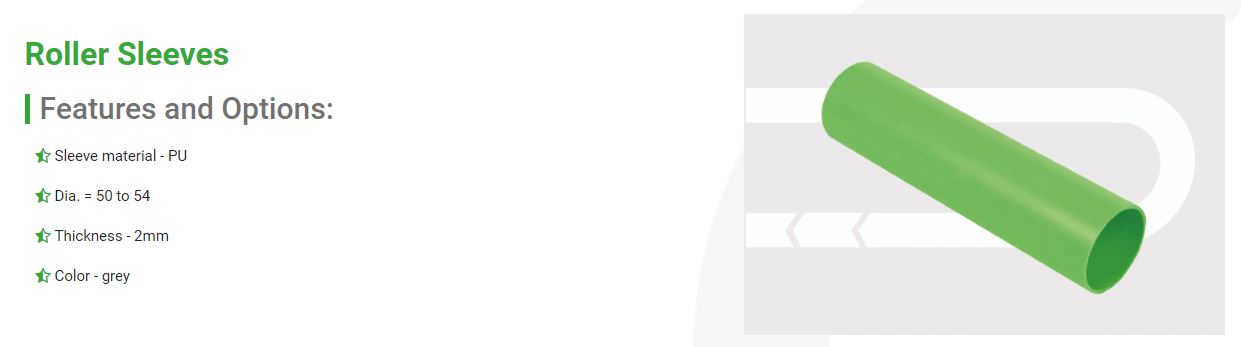
- Optional Polyurethane sleeving
- Variable speed is standard
- Safe low voltage & wide range of speeds
- 1201/1202 | Belt Rollers, Single or Double Groove Light/Medium Duty Conveyors Rollers, Custom Made Grooves | ⌀50mm Roller | ⌀11mm, ⌀14mm Shafts
- 1203 | Belt Pulley Rollers, Light/Medium Duty Conveyor Rollers | ⌀50mm Roller | ⌀11mm, ⌀14mm Shafts
- Suitable for wide range of application for Buffer or accumulation require
- Single drive with start/stop application suitable
- Single or double 14 teeth x 1/2” sprockets can be fitted (choice of steel or nylon sprockets)
- Mild steel and stainless steel options
- Stainless steel options available for all fixed driven conveyor rollers
- 1301/1302 | Polymer sprocket rollers, single or double sprocket, low running noise, polyamide bearing housing | 50mm Dia | ⌀14mm Shaft
- 1303/1304 | Steel sprocket, single or double sprocket, polyamide bearing housing | ⌀50mm Roller | ⌀14mm Shafts
- 1305/1306 | Steel sprocket, adjustable torque, single or double sprocket, polyamide/steel bearing housing | ⌀50mm, ⌀60mm, ⌀76 mm Rollers | ⌀14mm, ⌀15mm, ⌀20mm Shafts
- 1201/1202 | belt rollers, single or double groove light/medium duty conveyor rollers, custom made groove | ⌀50mm Roller | ⌀11mm, ⌀14mm Shafts
- 1203 | Belt Pulley Rollers, Light/Medium Duty Conveyor Rollers | ⌀50mm Roller | ⌀11mm, ⌀14mm Shafts
- Single and Double Grooves option
- Light and medium duty driven roller fitter with nylon O ring sprocket
- Line-shaft and 24V DC motorized rollers conveyors
- Mild steel, stainless steel and plastic options
- Stainless steel options available for all fixed driven conveyor rollers
- Free running bearings
- Wide range of tube and shaft options
- Wide range to handle from 100gm to 500kg per roller capacity
- Mild steel, stainless steel and plastic options
- Our most economical price rollers
- 1101 | PVC tube, polyamide bearing housing, light duty conveyor rollers | ⌀25mm, ⌀38mm, ⌀50mm Rollers | ⌀10mm, ⌀12mm Shafts
- 1102 | Light and medium duty universal conveyor rollers, polyamide bearing housing | ⌀25mm, ⌀38mm, ⌀50mm, ⌀76mm, ⌀89mm Rollers | ⌀14mm, ⌀20mm Shafts
- 1103 | Gravity conveyor rollers, steel bearing housing | ⌀50mm, ⌀76mm, ⌀89mm Rollers | ⌀14mm, ⌀20mm Shafts
- 1201/1202 | belt rollers, single or double groove light/medium duty conveyor rollers, custom made groove | ⌀50mm Roller | ⌀11mm, ⌀14mm Shafts
- 1203 | Belt Pulley Rollers, Light/Medium Duty Conveyor Rollers | ⌀50mm Roller | ⌀11mm, ⌀14mm Shafts
- 1204 | Poly V belt pulley rollers, medium duty and high speed conveyor rollers | ⌀50mm Roller | ⌀11mm, ⌀14mm Shafts
- 1205 | Timing belt pulley rollers, medium duty and high speed conveyor rollers | ⌀50mm Roller | ⌀11mm, ⌀14mm Shafts
- 1206/1207 | Polymer sprocket rollers, single or double sprocket, medium duty and low running noise, polyamide bearing housing | ⌀50mm Roller | ⌀14mm Shafts
- 1208/1209 | Steel sprocket, single or double sprocket, medium/heavy duty conveying application, polyamide bearing housing | ⌀50mm, ⌀60mm, ⌀76mm Rollers, ⌀89mm Roller | ⌀14mm, ⌀15mm, ⌀20mm Shafts
- 1210/1211 | Steel sprocket, steel bearing housing, heavy duty conveying, strong and reliable | ⌀50mm, ⌀76mm, ⌀89mm Rollers | ⌀14mm, ⌀15mm, ⌀20mm Shafts
- Free running option for gravity roller conveyors.
- All tapered conveyor rollers have a sealed bearing option for wash-down areas
- 50mm diameter base roller can be grooved for line-shaft conveyors
- Tapered sleeve rollers to suits an inside radius of 500mm to 1200mm
- Single or double 14 teeth x 1/2” sprockets can be fitted (choice of steel or nylon sprockets)
- Mild steel and stainless steel options
- Stainless steel options available for all fixed driven conveyor rollers
- 1401 | Gravity tapered roller, attractive look and low noise | ⌀53mm, ⌀56mm, ⌀50mm Rollers | ⌀12mm, ⌀14mm Shafts
- 1402 | belt drive, Double grooved tapered sleeve roller, customized groove position | ⌀53mm, ⌀56mm, ⌀50mm Rollers | ⌀14mm Shaft
- 1403 | belt pulley drive, Double grooved O belt pulley tapered sleeve roller | ⌀53mm, ⌀56mm, ⌀50mm Rollers | ⌀14mm Shaft
- 1404 | Poly vee belt pulley drive tapered sleeve roller, high speed, low noise | ⌀53mm, ⌀56mm, ⌀50mm Rollers | ⌀14mm Shaft
- 1405 | Polymer sprocket drive tapered sleeve roller, medium duty, low noise | ⌀53mm, ⌀56mm, ⌀50mm Rollers | ⌀14mm Shaft
- Widths | 250mm, 350mm, 450mm, 650mm, 850mm |
- Lengths | 500mm, 1000mm, 1500mm, 2000mm, 2500mm |
- Max Pallet/Carrier Wgt (kg) | 50kg/250kg |
- Pallet Sizes | 238X306, 332X430, 428X550, 522X670 |
- Height Range | 500mm - 1000mm |
- Load Accuracy | +/-0.5mm Stop Unit | +/-0.1mm Locating Pin | +/-.05mm Lift & Locate |
- Roller Pitch | 82.5mm, 127mm, 150.8mm |
- Roller ⌀ | 50mm, 76mm |
- Max Length per Drive | 7500mm |
- Drive Motor Size | .5HP, 1HP | SEW |
- Drive Speeds | 2-24 mpm
- Frame Materials | Aluminum or Powder Coat Mild Steel
- High energy efficiency level with different load application
- Safe, affordable operation without the need for guarding
- Tight positioning tolerances thanks to high precision guide rails
- Active braking and lifting of the Pallets
- Unlimited zero pressure accumulation of Pallets
- Flexible speeds from 0.2 to 24m/min between communication points
- Constant 24V auxiliary power available for energy Saving
- Very limited preventative maintenance required
- No track maintenance due to no moving parts in the track
- Very low noise level, less than 60db(A)
- Easy tracking of the Carts/parts throughout the layout
- Highly standardized components
- Significantly reduced wiring and commissioning time
- Low profile for easy part access around the line
- Tip protection for overhanging loads optionally available
- Adaptable pallet length to fit the size of your part