How Conveyor Clutch Systems Improve Precision and Reliability in Index Conveyor Applications

What to Look for When Sourcing Automation-Ready Conveyor Systems From the Best Conveyor System Manufacturers for Industrial Uses
June 17, 2026
6 Situations Where a Gravity Spiral Chute Improves Product Handling
August 18, 2026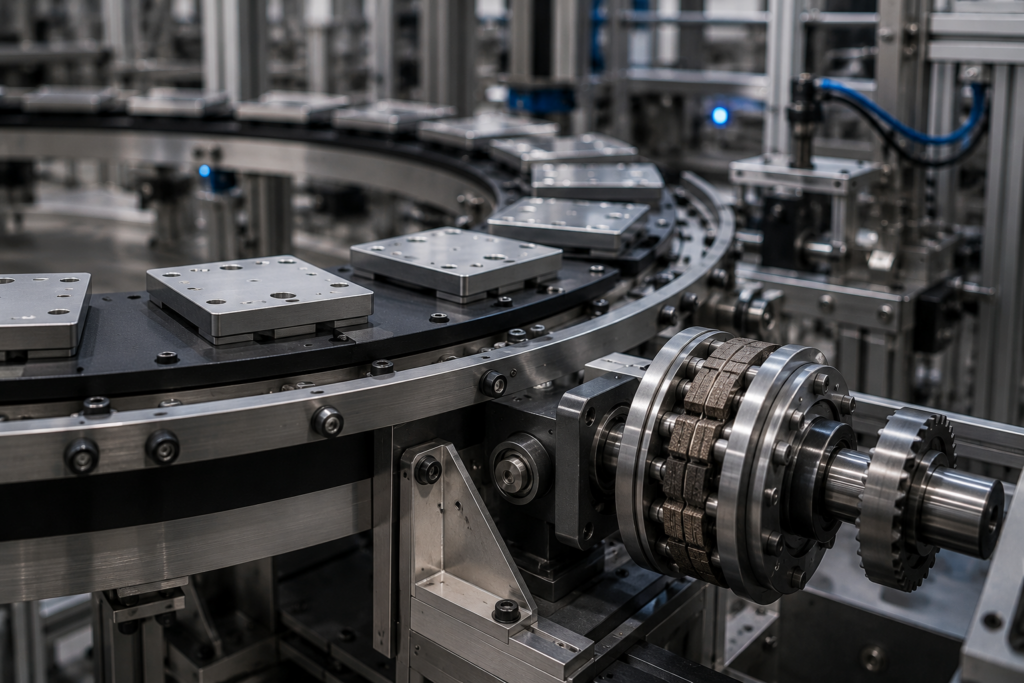
Index conveyor systems are designed to move products in controlled increments rather than continuous motion. This stop-and-start operation is common in packaging, inspection, assembly, and food processing environments where precise positioning is required at each workstation. While motors and controls often receive the most attention during system design, the performance of key mechanical conveyor components is equally important for maintaining accuracy and reliability.
Among these components, the conveyor clutch serves as a critical link between the drive system and conveyor movement. Proper clutch selection can improve indexing precision, reduce mechanical stress, and help facilities maintain consistent throughput across automated operations.
People Also Ask
What does a conveyor clutch do in an index conveyor system?
A conveyor clutch controls the engagement and disengagement of power between the drive system and the conveyor. In index conveyor applications, it helps achieve accurate starts, stops, and positioning for automated processes.
How do conveyor components affect indexing accuracy?
Key conveyor components, including clutches, motors, sprockets, bearings, and sensors, work together to control movement. Properly maintained components help ensure consistent product positioning and reduce operational disruptions.
When should a conveyor clutch be replaced?
A conveyor clutch should be inspected if the system experiences inconsistent indexing, excessive vibration, unusual noise, or positioning errors. Early replacement can help prevent damage to other conveyor components and reduce downtime.
Why Index Conveyor Systems Require Precise Motion Control
Unlike continuous conveying applications, index conveyors must repeatedly accelerate, stop, and hold products at exact locations. Even small positioning errors can affect downstream processes such as filling, labelling, robotic pick-and-place operations, or vision inspection.
Every movement cycle generates forces that propagate through the drivetrain, conveyor frame, and transfer points. Without proper motion control, these forces can increase wear on conveyor components and contribute to alignment issues, product instability, and premature equipment failure.
A properly engineered conveyor clutch helps manage these transitions by engaging and disengaging power transmission more precisely. This allows the system to deliver repeatable movement while reducing unnecessary mechanical shock.
How a Conveyor Clutch Supports Accurate Indexing
A conveyor clutch functions as a controlled engagement mechanism between the motor and the driven equipment. In index conveyor applications, the clutch allows motion to begin and end at precise intervals while maintaining synchronization with the overall control system.
When integrated correctly, a conveyor clutch can:
- Improve stopping accuracy during indexing cycles
- Reduce shock loading during startup
- Support smoother acceleration and deceleration
- Minimize slippage between drive components
- Enhance repeatability across high-cycle production environments
These benefits become increasingly important in facilities operating multiple shifts, where thousands of indexing cycles occur every day.
The Relationship Between Conveyor Components and System Reliability
Reliable indexing performance depends on more than a single mechanical device. Every conveyor clutch operates within a broader network of conveyor components that must function together efficiently.
Key components include:
- Drive motors
- Gear reducers
- Bearings
- Shafts
- Sprockets
- Belts or chains
- Sensors and position feedback devices
When one component experiences excessive wear or misalignment, the effects often spread throughout the system. For example, inconsistent clutch engagement can increase stress on sprockets and bearings, while poorly maintained drive components may create positioning errors that affect product flow.
CONOVEY engineers conveyor systems with attention to both individual component performance and overall system integration. This approach helps facilities achieve reliable operation while reducing long-term maintenance requirements.
Common Signs of Conveyor Clutch Performance Issues
Clutch-related problems often develop gradually before causing noticeable production disruptions. Maintenance teams should monitor systems for warning signs that indicate performance degradation.
Common indicators include:
- Inconsistent indexing positions
- Excessive vibration during startup
- Increased stopping distances
- Unusual noise from the drive assembly
- Higher component wear rates
- Product placement variability
Addressing these issues early can prevent more significant failures that lead to unplanned downtime and costly repairs.
Routine inspections should include verification of clutch engagement performance, alignment checks, and evaluation of surrounding conveyor components that influence power transmission.
Selecting the Right Conveyor Components for High-Cycle Operations
Facilities operating high-speed automated lines should evaluate conveyor equipment based on the total operating environment rather than individual specifications alone.
Several factors influence clutch and component selection:
Load Characteristics
Product weight, distribution, and accumulation patterns affect torque requirements and engagement performance.
Cycle Frequency
High-cycle applications place greater demands on clutch systems and surrounding conveyor components, making durability a critical consideration.
Environmental Conditions
Food processing, washdown environments, thermal processing areas, and packaging operations each create unique operating challenges that influence material selection and maintenance requirements.
Integration Requirements
Clutch systems must work seamlessly with PLCs, sensors, and motion controls to achieve accurate indexing and reliable throughput.
CONOVEY evaluates these factors during system design to help facilities select solutions that align with production goals, maintenance strategies, and future expansion plans.
Improving Long-Term Performance Through Proper Engineering
Index conveyors are only as reliable as the mechanical systems that drive them. While software and controls manage movement logic, physical performance depends on the quality and integration of critical conveyor components.
A properly selected conveyor clutch helps improve positioning accuracy, reduce wear, and support consistent operation across demanding automated environments. Combined with durable conveyor components and a well-engineered system architecture, clutch technology contributes directly to productivity, equipment longevity, and operational reliability.
Facilities evaluating new indexing applications should consider both immediate performance requirements and long-term maintenance implications. A comprehensive engineering approach often delivers greater value than focusing solely on upfront equipment costs.


- Various Drive Options
- Tapered Rollers also available
- Optional Polyurethane sleeving
- Variable speed is standard
- Safe low voltage & wide range of speeds
- 1201/1202 | Belt Rollers, Single or Double Groove Light/Medium Duty Conveyors Rollers, Custom Made Grooves | ⌀50mm Roller | ⌀11mm, ⌀14mm Shafts
- 1203 | Belt Pulley Rollers, Light/Medium Duty Conveyor Rollers | ⌀50mm Roller | ⌀11mm, ⌀14mm Shafts
- Suitable for wide range of application for Buffer or accumulation require
- Single drive with start/stop application suitable
- Single or double 14 teeth x 1/2” sprockets can be fitted (choice of steel or nylon sprockets)
- Mild steel and stainless steel options
- Stainless steel options available for all fixed driven conveyor rollers
- 1301/1302 | Polymer sprocket rollers, single or double sprocket, low running noise, polyamide bearing housing | 50mm Dia | ⌀14mm Shaft
- 1303/1304 | Steel sprocket, single or double sprocket, polyamide bearing housing | ⌀50mm Roller | ⌀14mm Shafts
- 1305/1306 | Steel sprocket, adjustable torque, single or double sprocket, polyamide/steel bearing housing | ⌀50mm, ⌀60mm, ⌀76 mm Rollers | ⌀14mm, ⌀15mm, ⌀20mm Shafts
- 1201/1202 | belt rollers, single or double groove light/medium duty conveyor rollers, custom made groove | ⌀50mm Roller | ⌀11mm, ⌀14mm Shafts
- 1203 | Belt Pulley Rollers, Light/Medium Duty Conveyor Rollers | ⌀50mm Roller | ⌀11mm, ⌀14mm Shafts
- Single and Double Grooves option
- Light and medium duty driven roller fitter with nylon O ring sprocket
- Line-shaft and 24V DC motorized rollers conveyors
- Mild steel, stainless steel and plastic options
- Stainless steel options available for all fixed driven conveyor rollers
- Free running bearings
- Wide range of tube and shaft options
- Wide range to handle from 100gm to 500kg per roller capacity
- Mild steel, stainless steel and plastic options
- Our most economical price rollers
- 1101 | PVC tube, polyamide bearing housing, light duty conveyor rollers | ⌀25mm, ⌀38mm, ⌀50mm Rollers | ⌀10mm, ⌀12mm Shafts
- 1102 | Light and medium duty universal conveyor rollers, polyamide bearing housing | ⌀25mm, ⌀38mm, ⌀50mm, ⌀76mm, ⌀89mm Rollers | ⌀14mm, ⌀20mm Shafts
- 1103 | Gravity conveyor rollers, steel bearing housing | ⌀50mm, ⌀76mm, ⌀89mm Rollers | ⌀14mm, ⌀20mm Shafts
- 1201/1202 | belt rollers, single or double groove light/medium duty conveyor rollers, custom made groove | ⌀50mm Roller | ⌀11mm, ⌀14mm Shafts
- 1203 | Belt Pulley Rollers, Light/Medium Duty Conveyor Rollers | ⌀50mm Roller | ⌀11mm, ⌀14mm Shafts
- 1204 | Poly V belt pulley rollers, medium duty and high speed conveyor rollers | ⌀50mm Roller | ⌀11mm, ⌀14mm Shafts
- 1205 | Timing belt pulley rollers, medium duty and high speed conveyor rollers | ⌀50mm Roller | ⌀11mm, ⌀14mm Shafts
- 1206/1207 | Polymer sprocket rollers, single or double sprocket, medium duty and low running noise, polyamide bearing housing | ⌀50mm Roller | ⌀14mm Shafts
- 1208/1209 | Steel sprocket, single or double sprocket, medium/heavy duty conveying application, polyamide bearing housing | ⌀50mm, ⌀60mm, ⌀76mm Rollers, ⌀89mm Roller | ⌀14mm, ⌀15mm, ⌀20mm Shafts
- 1210/1211 | Steel sprocket, steel bearing housing, heavy duty conveying, strong and reliable | ⌀50mm, ⌀76mm, ⌀89mm Rollers | ⌀14mm, ⌀15mm, ⌀20mm Shafts
- Free running option for gravity roller conveyors.
- All tapered conveyor rollers have a sealed bearing option for wash-down areas
- 50mm diameter base roller can be grooved for line-shaft conveyors
- Tapered sleeve rollers to suits an inside radius of 500mm to 1200mm
- Single or double 14 teeth x 1/2” sprockets can be fitted (choice of steel or nylon sprockets)
- Mild steel and stainless steel options
- Stainless steel options available for all fixed driven conveyor rollers
- 1401 | Gravity tapered roller, attractive look and low noise | ⌀53mm, ⌀56mm, ⌀50mm Rollers | ⌀12mm, ⌀14mm Shafts
- 1402 | belt drive, Double grooved tapered sleeve roller, customized groove position | ⌀53mm, ⌀56mm, ⌀50mm Rollers | ⌀14mm Shaft
- 1403 | belt pulley drive, Double grooved O belt pulley tapered sleeve roller | ⌀53mm, ⌀56mm, ⌀50mm Rollers | ⌀14mm Shaft
- 1404 | Poly vee belt pulley drive tapered sleeve roller, high speed, low noise | ⌀53mm, ⌀56mm, ⌀50mm Rollers | ⌀14mm Shaft
- 1405 | Polymer sprocket drive tapered sleeve roller, medium duty, low noise | ⌀53mm, ⌀56mm, ⌀50mm Rollers | ⌀14mm Shaft
- Widths | 250mm, 350mm, 450mm, 650mm, 850mm |
- Lengths | 500mm, 1000mm, 1500mm, 2000mm, 2500mm |
- Max Pallet/Carrier Wgt (kg) | 50kg/250kg |
- Pallet Sizes | 238X306, 332X430, 428X550, 522X670 |
- Height Range | 500mm - 1000mm |
- Load Accuracy | +/-0.5mm Stop Unit | +/-0.1mm Locating Pin | +/-.05mm Lift & Locate |
- Roller Pitch | 82.5mm, 127mm, 150.8mm |
- Roller ⌀ | 50mm, 76mm |
- Max Length per Drive | 7500mm |
- Drive Motor Size | .5HP, 1HP | SEW |
- Drive Speeds | 2-24 mpm
- Frame Materials | Aluminum or Powder Coat Mild Steel
- High energy efficiency level with different load application
- Safe, affordable operation without the need for guarding
- Tight positioning tolerances thanks to high precision guide rails
- Active braking and lifting of the Pallets
- Unlimited zero pressure accumulation of Pallets
- Flexible speeds from 0.2 to 24m/min between communication points
- Constant 24V auxiliary power available for energy Saving
- Very limited preventative maintenance required
- No track maintenance due to no moving parts in the track
- Very low noise level, less than 60db(A)
- Easy tracking of the Carts/parts throughout the layout
- Highly standardized components
- Significantly reduced wiring and commissioning time
- Low profile for easy part access around the line
- Tip protection for overhanging loads optionally available
- Adaptable pallet length to fit the size of your part