6 Maintenance Practices That Extend Spiral Freezer Belt Life

How Spiral Freezer Design Protects the Texture of Quick Frozen Foods
September 15, 2026
Spiral Freezers Vs. Spiral Cooling Conveyors for Food Lines
September 17, 2026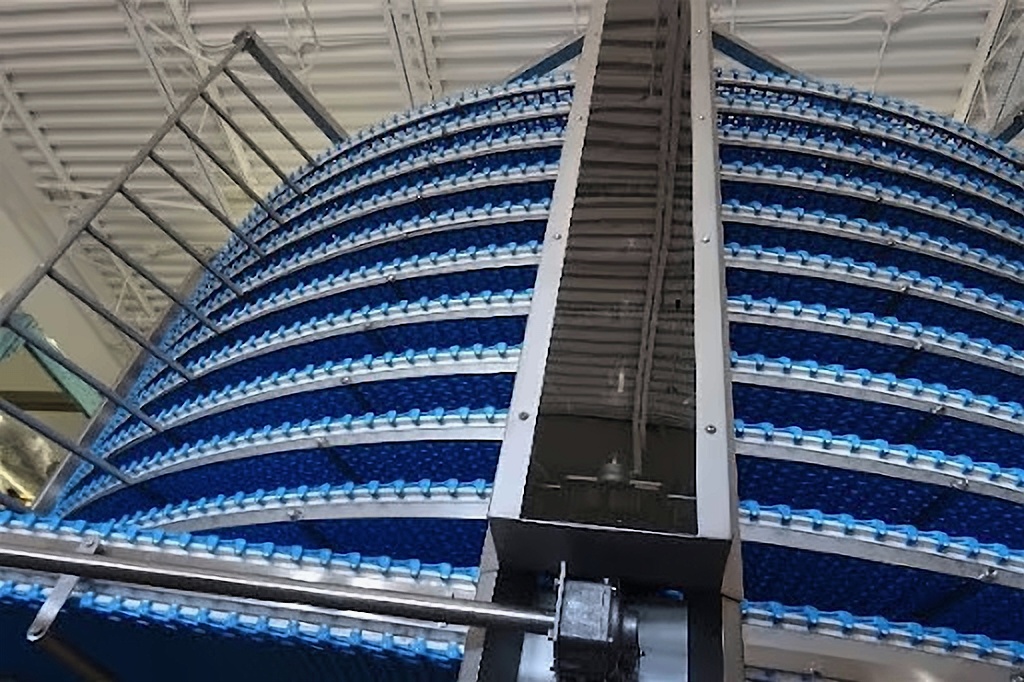
The belt is the part of a spiral freezer that never stops working. It carries every piece of product through the cold, sets the dwell time available, and takes the wear that continuous operation brings. When it fails, the whole line stops. Good spiral freezer belt maintenance is the difference between a planned service window and an unplanned outage that costs a full shift. Below are six practices that protect belt life and keep a spiral running through demanding production.
Routine Belt Tension and Tracking Checks
Belt tension and tracking sit at the top of any spiral freezer belt maintenance plan because they affect reliability, wear, and product handling across a long run. A belt that tracks poorly wears unevenly and drifts out of line, which shortens its life and threatens product flow. Check that the belt runs true and holds the correct tension, and fix any tracking issue early before it turns into damage. The Positive Drive design helps here, since it spreads load evenly and runs at roughly fifty percent lower tension than a conventional slip drive, which reduces the stress that drives belt wear.
Inspecting Drive Tabs and Cage Contact Surfaces
How the belt engages its drive decides how smoothly it moves. On a Positive Drive spiral, driving tabs on the inside edge of the belt engage vertical ribs on the center drum, so those tabs and contact surfaces deserve regular inspection. Worn engagement points let the belt slip or stutter, which disturbs the steady rows that protect product. Catching wear on drive tabs and cage contact surfaces early keeps the timing gear action working as intended and avoids a larger repair later.
Managing Ice Buildup on Belt and Rails
Cold, continuous operation invites ice, and buildup on the belt and rails adds friction and throws off tracking. Left unchecked, it stresses the belt and the drive. A built in belt wash helps manage this by keeping the belt clean through the run, and belt materials such as stainless grid and food grade acetal are chosen to survive repeated cleaning cycles. Keeping the belt and rails clear of ice protects both belt life and freeze consistency.
Scheduled Lubrication for Cold Environments
Moving parts in a sub zero environment need the right lubrication on a schedule to keep running smoothly. CONOVEY reduces this burden through maintenance free idle rollers and cage bushings, which cut the number of points that need routine service. Where lubrication is required, following a set schedule prevents the added friction and wear that missed service causes. Efficient drives also reduce maintenance, so a well specified spiral asks less of the maintenance team to begin with.
Monitoring Wear on Tier Guides and Bearings
Tier guides and bearings carry the belt through every coil, and their condition shapes how long the belt lasts. Worn guides let the belt rub or ride incorrectly, while failing bearings add drag and heat. Enclosed gear motors and maintenance free cage bushings are used so water stays away from the drives and bearings during washdown, which protects these components. Monitoring guides and bearings for wear lets a plant replace a small part on schedule instead of losing the belt to a preventable failure.
Recordkeeping to Predict Component Replacement
Knowing how long a belt lasts turns maintenance from reactive to planned. Tracking belt life and service history helps a plant develop a replacement plan, since a belt in one operation may wear far faster than in another. Keeping spare parts on hand, especially where an OutRunner shares standard SpanTech components, means a replacement is ready when the record says it is due. Establishing preventive maintenance protocols and routine inspections with the manufacturer keeps regular belt care on schedule and minimizes downtime for repairs.
Keeping the Belt Running for the Long Term
These six practices share one aim: a belt that lasts and a line that keeps moving. Consistent tension and tracking checks, drive and component inspection, ice and lubrication management, and honest recordkeeping all protect the investment a spiral represents. But maintenance only goes so far on equipment that was never built for it. The easiest belt to maintain is one that was designed to be maintained, which is really a question of how spiral freezer manufacturers engineer custom freezing systems in the first place. A spiral built with maintenance-free components and a built-in belt wash is simply easier to keep running, shift after shift.
The real cost of a belt is never the part itself. It is the production lost when the belt fails without warning. Staying ahead of that wear is what keeps a line predictable and profitable. CONOVEY builds spiral conveyors with features that reduce the service burden, and backs them with preventive maintenance and responsive service. Contact CONOVEY to set up a maintenance plan that extends the belt life of your spiral freezer.


- Various Drive Options
- Tapered Rollers also available
- Optional Polyurethane sleeving
- Variable speed is standard
- Safe low voltage & wide range of speeds
- 1201/1202 | Belt Rollers, Single or Double Groove Light/Medium Duty Conveyors Rollers, Custom Made Grooves | ⌀50mm Roller | ⌀11mm, ⌀14mm Shafts
- 1203 | Belt Pulley Rollers, Light/Medium Duty Conveyor Rollers | ⌀50mm Roller | ⌀11mm, ⌀14mm Shafts
- Suitable for wide range of application for Buffer or accumulation require
- Single drive with start/stop application suitable
- Single or double 14 teeth x 1/2” sprockets can be fitted (choice of steel or nylon sprockets)
- Mild steel and stainless steel options
- Stainless steel options available for all fixed driven conveyor rollers
- 1301/1302 | Polymer sprocket rollers, single or double sprocket, low running noise, polyamide bearing housing | 50mm Dia | ⌀14mm Shaft
- 1303/1304 | Steel sprocket, single or double sprocket, polyamide bearing housing | ⌀50mm Roller | ⌀14mm Shafts
- 1305/1306 | Steel sprocket, adjustable torque, single or double sprocket, polyamide/steel bearing housing | ⌀50mm, ⌀60mm, ⌀76 mm Rollers | ⌀14mm, ⌀15mm, ⌀20mm Shafts
- 1201/1202 | belt rollers, single or double groove light/medium duty conveyor rollers, custom made groove | ⌀50mm Roller | ⌀11mm, ⌀14mm Shafts
- 1203 | Belt Pulley Rollers, Light/Medium Duty Conveyor Rollers | ⌀50mm Roller | ⌀11mm, ⌀14mm Shafts
- Single and Double Grooves option
- Light and medium duty driven roller fitter with nylon O ring sprocket
- Line-shaft and 24V DC motorized rollers conveyors
- Mild steel, stainless steel and plastic options
- Stainless steel options available for all fixed driven conveyor rollers
- Free running bearings
- Wide range of tube and shaft options
- Wide range to handle from 100gm to 500kg per roller capacity
- Mild steel, stainless steel and plastic options
- Our most economical price rollers
- 1101 | PVC tube, polyamide bearing housing, light duty conveyor rollers | ⌀25mm, ⌀38mm, ⌀50mm Rollers | ⌀10mm, ⌀12mm Shafts
- 1102 | Light and medium duty universal conveyor rollers, polyamide bearing housing | ⌀25mm, ⌀38mm, ⌀50mm, ⌀76mm, ⌀89mm Rollers | ⌀14mm, ⌀20mm Shafts
- 1103 | Gravity conveyor rollers, steel bearing housing | ⌀50mm, ⌀76mm, ⌀89mm Rollers | ⌀14mm, ⌀20mm Shafts
- 1201/1202 | belt rollers, single or double groove light/medium duty conveyor rollers, custom made groove | ⌀50mm Roller | ⌀11mm, ⌀14mm Shafts
- 1203 | Belt Pulley Rollers, Light/Medium Duty Conveyor Rollers | ⌀50mm Roller | ⌀11mm, ⌀14mm Shafts
- 1204 | Poly V belt pulley rollers, medium duty and high speed conveyor rollers | ⌀50mm Roller | ⌀11mm, ⌀14mm Shafts
- 1205 | Timing belt pulley rollers, medium duty and high speed conveyor rollers | ⌀50mm Roller | ⌀11mm, ⌀14mm Shafts
- 1206/1207 | Polymer sprocket rollers, single or double sprocket, medium duty and low running noise, polyamide bearing housing | ⌀50mm Roller | ⌀14mm Shafts
- 1208/1209 | Steel sprocket, single or double sprocket, medium/heavy duty conveying application, polyamide bearing housing | ⌀50mm, ⌀60mm, ⌀76mm Rollers, ⌀89mm Roller | ⌀14mm, ⌀15mm, ⌀20mm Shafts
- 1210/1211 | Steel sprocket, steel bearing housing, heavy duty conveying, strong and reliable | ⌀50mm, ⌀76mm, ⌀89mm Rollers | ⌀14mm, ⌀15mm, ⌀20mm Shafts
- Free running option for gravity roller conveyors.
- All tapered conveyor rollers have a sealed bearing option for wash-down areas
- 50mm diameter base roller can be grooved for line-shaft conveyors
- Tapered sleeve rollers to suits an inside radius of 500mm to 1200mm
- Single or double 14 teeth x 1/2” sprockets can be fitted (choice of steel or nylon sprockets)
- Mild steel and stainless steel options
- Stainless steel options available for all fixed driven conveyor rollers
- 1401 | Gravity tapered roller, attractive look and low noise | ⌀53mm, ⌀56mm, ⌀50mm Rollers | ⌀12mm, ⌀14mm Shafts
- 1402 | belt drive, Double grooved tapered sleeve roller, customized groove position | ⌀53mm, ⌀56mm, ⌀50mm Rollers | ⌀14mm Shaft
- 1403 | belt pulley drive, Double grooved O belt pulley tapered sleeve roller | ⌀53mm, ⌀56mm, ⌀50mm Rollers | ⌀14mm Shaft
- 1404 | Poly vee belt pulley drive tapered sleeve roller, high speed, low noise | ⌀53mm, ⌀56mm, ⌀50mm Rollers | ⌀14mm Shaft
- 1405 | Polymer sprocket drive tapered sleeve roller, medium duty, low noise | ⌀53mm, ⌀56mm, ⌀50mm Rollers | ⌀14mm Shaft
- Widths | 250mm, 350mm, 450mm, 650mm, 850mm |
- Lengths | 500mm, 1000mm, 1500mm, 2000mm, 2500mm |
- Max Pallet/Carrier Wgt (kg) | 50kg/250kg |
- Pallet Sizes | 238X306, 332X430, 428X550, 522X670 |
- Height Range | 500mm - 1000mm |
- Load Accuracy | +/-0.5mm Stop Unit | +/-0.1mm Locating Pin | +/-.05mm Lift & Locate |
- Roller Pitch | 82.5mm, 127mm, 150.8mm |
- Roller ⌀ | 50mm, 76mm |
- Max Length per Drive | 7500mm |
- Drive Motor Size | .5HP, 1HP | SEW |
- Drive Speeds | 2-24 mpm
- Frame Materials | Aluminum or Powder Coat Mild Steel
- High energy efficiency level with different load application
- Safe, affordable operation without the need for guarding
- Tight positioning tolerances thanks to high precision guide rails
- Active braking and lifting of the Pallets
- Unlimited zero pressure accumulation of Pallets
- Flexible speeds from 0.2 to 24m/min between communication points
- Constant 24V auxiliary power available for energy Saving
- Very limited preventative maintenance required
- No track maintenance due to no moving parts in the track
- Very low noise level, less than 60db(A)
- Easy tracking of the Carts/parts throughout the layout
- Highly standardized components
- Significantly reduced wiring and commissioning time
- Low profile for easy part access around the line
- Tip protection for overhanging loads optionally available
- Adaptable pallet length to fit the size of your part