Top Types of Transfer Conveyors for Automated Production Lines

What Is a Flat Belt Conveyor? Key Advantages and Common Industrial Uses
October 16, 2025
Applications of Spiral Conveyors in the Bakery and Frozen Food Industries
December 3, 2025
Every automated production line relies on more than just advanced machinery and robotics—smooth and precise product transfer between stations is what keeps production running efficiently. The transfer conveyor is a vital link in this process, ensuring that materials and products move seamlessly from one stage to the next without misalignment, damage, or downtime. Whether used in food packaging, automotive assembly, or pharmaceutical manufacturing, these systems play an essential role in maintaining operational flow and consistency.
Behind the simplicity of movement lies precision engineering. Transfer conveyors are designed to handle a wide range of materials, from lightweight packaged goods to heavy industrial components, supporting modern automation with reliability and accuracy. As automation technology continues to expand across industries, these conveyors have become indispensable for consistent performance and production speed.
What Are Transfer Conveyors and Why Are They Important?
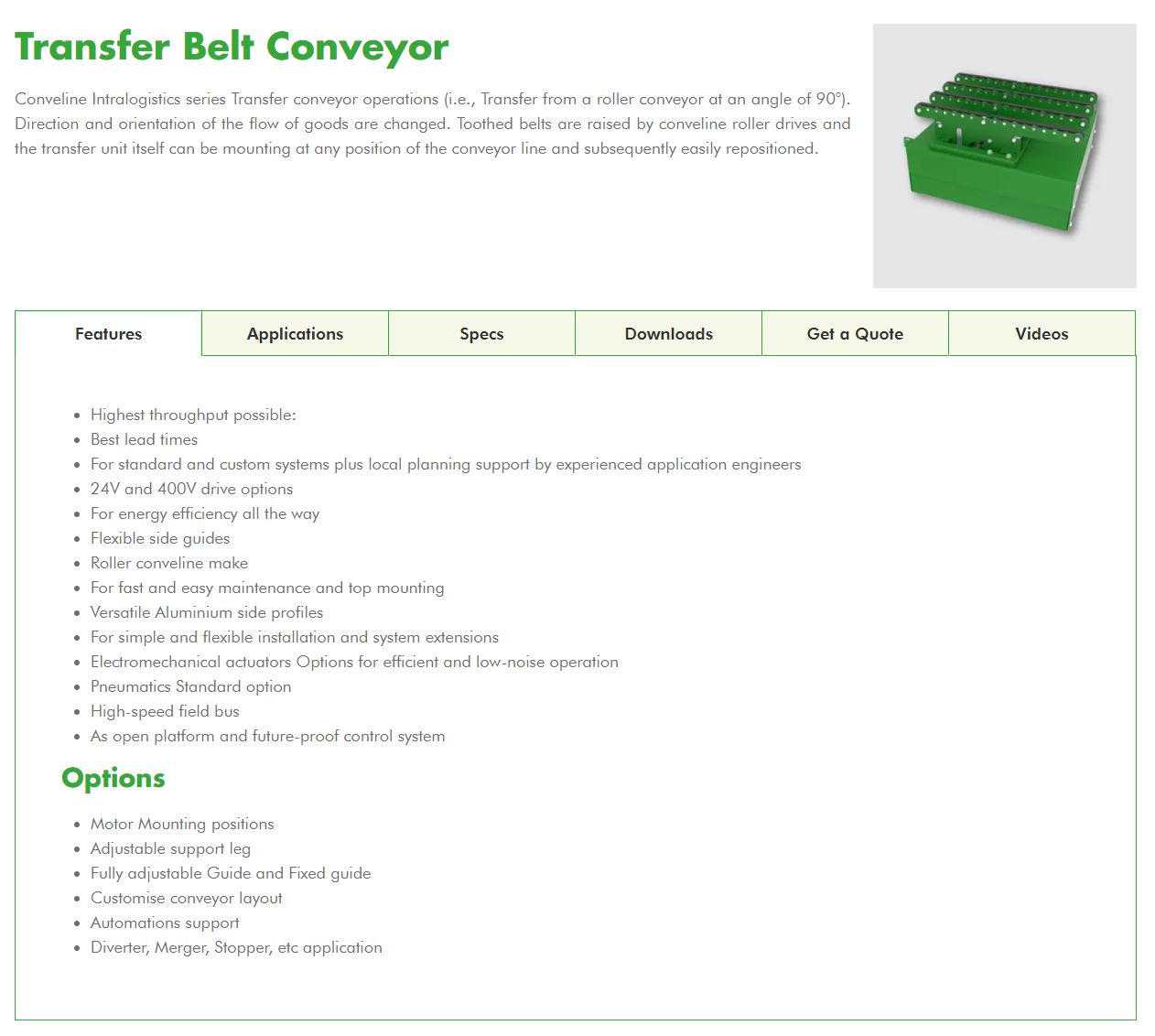
A transfer conveyor is designed to move materials or products between different conveyors, machines, or workstations in a production line. These systems ensure uninterrupted flow and are often integrated with accumulation conveyor setups or robotic systems. By bridging gaps and managing product positioning, transfer conveyors eliminate manual handling and reduce the risk of errors during transitions.
Their importance lies in enabling efficient throughput while minimizing product damage or misfeeds—key requirements in high-speed automated environments.
Key Benefits of Using Transfer Conveyors in Automation
Transfer conveyors bring numerous operational advantages to automated production lines:
- Seamless Product Flow: Reduces bottlenecks and ensures a steady flow of movement between processes.
- Improved Accuracy: Maintains alignment and orientation for precise downstream handling.
- Reduced Manual Labour: Lowers dependency on human intervention, enhancing safety.
- Custom Configuration: Easily integrates with other systems, like straight conveyors or accumulation units.
- Enhanced Efficiency: Supports faster production cycles and consistent output quality.
These advantages make transfer conveyors a core element of efficient and scalable automation systems.
Top Types of Transfer Conveyors for Automated Production Lines
Modern manufacturing facilities use various types of transfer conveyors based on the nature of their products and workflows:
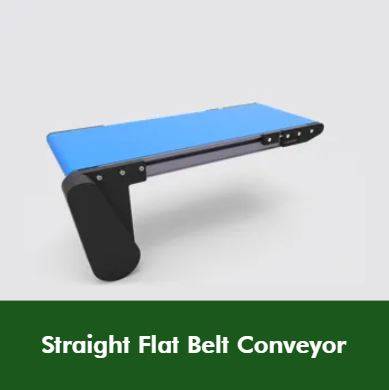
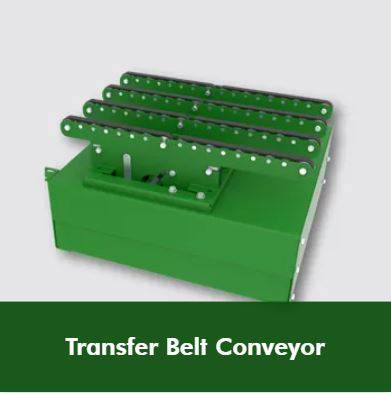
- Belt Transfer Conveyors: Ideal for general material transfer, these conveyors utilize flat or modular belts to move products between stations smoothly.
- Chain Transfer Conveyors: Designed for heavy-duty applications, these chains utilize linked links to handle large pallets or containers with precision.
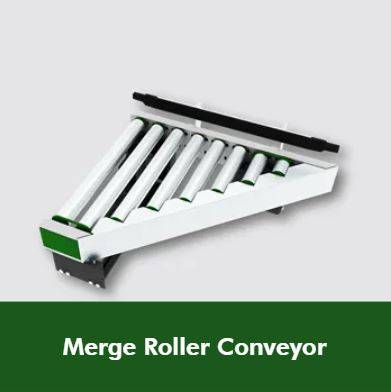
- Roller Transfer Conveyors: Commonly paired with accumulation conveyors, roller systems allow for controlled product flow and buffering without line stoppages.
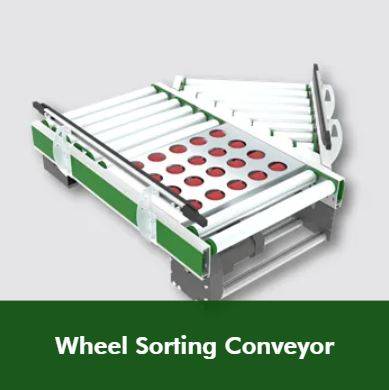
- Transfer Tables and Cross Transfers: These mechanisms redirect products at 90-degree angles or switch items between conveyor lanes, which is essential in sorting and packaging operations.
- Pneumatic or Air Transfer Systems: Suitable for lightweight or delicate items, these conveyors use air pressure for rapid, contact-free movement.
Each system type offers distinct advantages depending on production volume, product type, and environmental conditions.
How to Choose the Right Transfer Conveyor for the Line
Selecting the right transfer conveyor requires careful evaluation of several factors, including product weight, transfer speed, spacing requirements, and system layout. For example, belt transfers are suitable for compact facilities, while chain or roller transfers perform better in heavy industrial environments. Integration with existing straight conveyor lines and robotic automation should also be considered to maintain uniform movement and avoid misalignment.
Design Considerations for Reliable Transfers
Reliable transfer design involves striking a balance between performance and precision. Key design aspects include alignment tolerances, belt surface friction, and transition angles. Adjustable guide rails, speed controls, and lift mechanisms help fine-tune the system for maximum accuracy. Additionally, durable frame construction and sanitary design features are essential for industries such as food processing and pharmaceuticals, where hygiene and reliability are critical.
Why Partner with a Conveyor Manufacturer for Transfer Solutions
Working with a trusted conveyor manufacturer ensures proper system integration and customization. Engineering precision is crucial to achieving smooth transitions, optimal spacing, and synchronized control between conveyors. Manufacturers like Conovey specialize in engineered transfer systems that fit seamlessly within automated production lines, providing long-term performance and reduced maintenance needs.
Seamless Transfers, Smarter Production
The efficiency of an automated production line depends on the strength of its connections—and transfer conveyors form those essential links. Whether it’s a straight conveyor for streamlined movement or an accumulation conveyor for buffering and flow control, each system contributes to smoother, safer, and faster operations. For tailored, precision-engineered material handling conveyor systems, Conovey delivers solutions built for lasting reliability and performance.
Contact Conovey today to discuss transfer conveyor solutions that optimize production flow and ensure seamless automation from start to finish.


- Various Drive Options
- Tapered Rollers also available
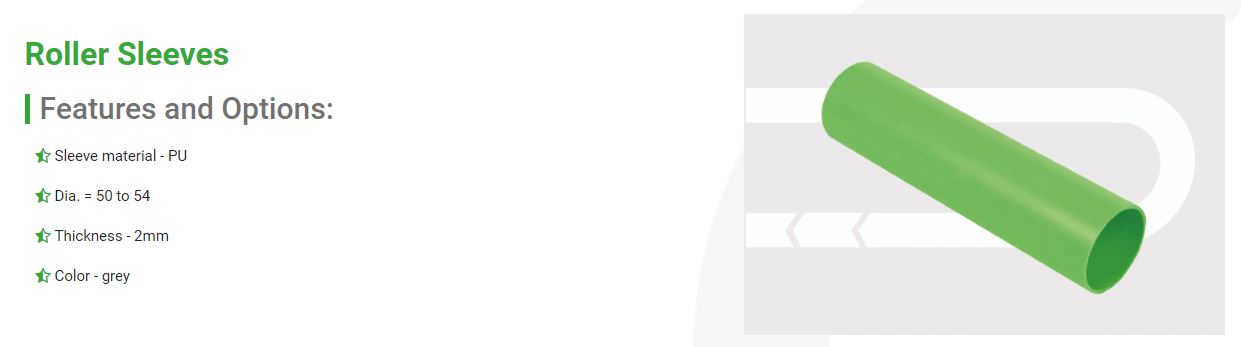
- Optional Polyurethane sleeving
- Variable speed is standard
- Safe low voltage & wide range of speeds
- 1201/1202 | Belt Rollers, Single or Double Groove Light/Medium Duty Conveyors Rollers, Custom Made Grooves | ⌀50mm Roller | ⌀11mm, ⌀14mm Shafts
- 1203 | Belt Pulley Rollers, Light/Medium Duty Conveyor Rollers | ⌀50mm Roller | ⌀11mm, ⌀14mm Shafts
- Suitable for wide range of application for Buffer or accumulation require
- Single drive with start/stop application suitable
- Single or double 14 teeth x 1/2” sprockets can be fitted (choice of steel or nylon sprockets)
- Mild steel and stainless steel options
- Stainless steel options available for all fixed driven conveyor rollers
- 1301/1302 | Polymer sprocket rollers, single or double sprocket, low running noise, polyamide bearing housing | 50mm Dia | ⌀14mm Shaft
- 1303/1304 | Steel sprocket, single or double sprocket, polyamide bearing housing | ⌀50mm Roller | ⌀14mm Shafts
- 1305/1306 | Steel sprocket, adjustable torque, single or double sprocket, polyamide/steel bearing housing | ⌀50mm, ⌀60mm, ⌀76 mm Rollers | ⌀14mm, ⌀15mm, ⌀20mm Shafts
- 1201/1202 | belt rollers, single or double groove light/medium duty conveyor rollers, custom made groove | ⌀50mm Roller | ⌀11mm, ⌀14mm Shafts
- 1203 | Belt Pulley Rollers, Light/Medium Duty Conveyor Rollers | ⌀50mm Roller | ⌀11mm, ⌀14mm Shafts
- Single and Double Grooves option
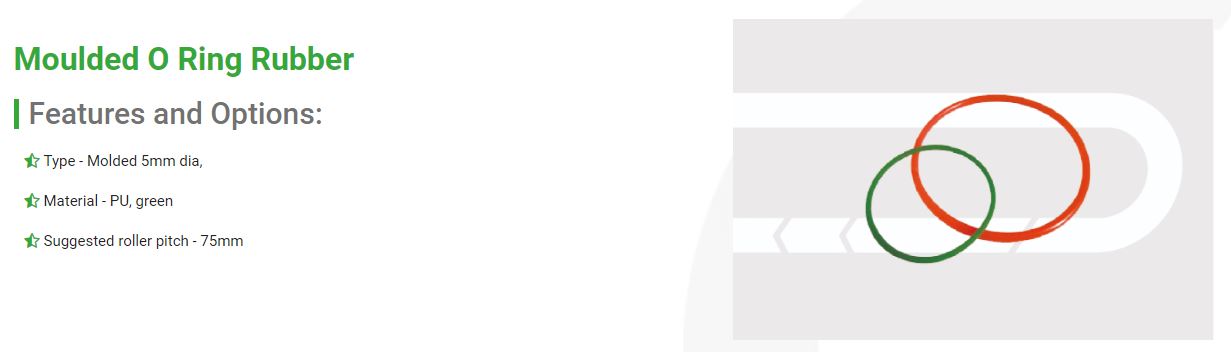
- Light and medium duty driven roller fitter with nylon O ring sprocket
- Line-shaft and 24V DC motorized rollers conveyors
- Mild steel, stainless steel and plastic options
- Stainless steel options available for all fixed driven conveyor rollers
- Free running bearings
- Wide range of tube and shaft options
- Wide range to handle from 100gm to 500kg per roller capacity
- Mild steel, stainless steel and plastic options
- Our most economical price rollers
- 1101 | PVC tube, polyamide bearing housing, light duty conveyor rollers | ⌀25mm, ⌀38mm, ⌀50mm Rollers | ⌀10mm, ⌀12mm Shafts
- 1102 | Light and medium duty universal conveyor rollers, polyamide bearing housing | ⌀25mm, ⌀38mm, ⌀50mm, ⌀76mm, ⌀89mm Rollers | ⌀14mm, ⌀20mm Shafts
- 1103 | Gravity conveyor rollers, steel bearing housing | ⌀50mm, ⌀76mm, ⌀89mm Rollers | ⌀14mm, ⌀20mm Shafts
- 1201/1202 | belt rollers, single or double groove light/medium duty conveyor rollers, custom made groove | ⌀50mm Roller | ⌀11mm, ⌀14mm Shafts
- 1203 | Belt Pulley Rollers, Light/Medium Duty Conveyor Rollers | ⌀50mm Roller | ⌀11mm, ⌀14mm Shafts
- 1204 | Poly V belt pulley rollers, medium duty and high speed conveyor rollers | ⌀50mm Roller | ⌀11mm, ⌀14mm Shafts
- 1205 | Timing belt pulley rollers, medium duty and high speed conveyor rollers | ⌀50mm Roller | ⌀11mm, ⌀14mm Shafts
- 1206/1207 | Polymer sprocket rollers, single or double sprocket, medium duty and low running noise, polyamide bearing housing | ⌀50mm Roller | ⌀14mm Shafts
- 1208/1209 | Steel sprocket, single or double sprocket, medium/heavy duty conveying application, polyamide bearing housing | ⌀50mm, ⌀60mm, ⌀76mm Rollers, ⌀89mm Roller | ⌀14mm, ⌀15mm, ⌀20mm Shafts
- 1210/1211 | Steel sprocket, steel bearing housing, heavy duty conveying, strong and reliable | ⌀50mm, ⌀76mm, ⌀89mm Rollers | ⌀14mm, ⌀15mm, ⌀20mm Shafts
- Free running option for gravity roller conveyors.
- All tapered conveyor rollers have a sealed bearing option for wash-down areas
- 50mm diameter base roller can be grooved for line-shaft conveyors
- Tapered sleeve rollers to suits an inside radius of 500mm to 1200mm
- Single or double 14 teeth x 1/2” sprockets can be fitted (choice of steel or nylon sprockets)
- Mild steel and stainless steel options
- Stainless steel options available for all fixed driven conveyor rollers
- 1401 | Gravity tapered roller, attractive look and low noise | ⌀53mm, ⌀56mm, ⌀50mm Rollers | ⌀12mm, ⌀14mm Shafts
- 1402 | belt drive, Double grooved tapered sleeve roller, customized groove position | ⌀53mm, ⌀56mm, ⌀50mm Rollers | ⌀14mm Shaft
- 1403 | belt pulley drive, Double grooved O belt pulley tapered sleeve roller | ⌀53mm, ⌀56mm, ⌀50mm Rollers | ⌀14mm Shaft
- 1404 | Poly vee belt pulley drive tapered sleeve roller, high speed, low noise | ⌀53mm, ⌀56mm, ⌀50mm Rollers | ⌀14mm Shaft
- 1405 | Polymer sprocket drive tapered sleeve roller, medium duty, low noise | ⌀53mm, ⌀56mm, ⌀50mm Rollers | ⌀14mm Shaft
- Widths | 250mm, 350mm, 450mm, 650mm, 850mm |
- Lengths | 500mm, 1000mm, 1500mm, 2000mm, 2500mm |
- Max Pallet/Carrier Wgt (kg) | 50kg/250kg |
- Pallet Sizes | 238X306, 332X430, 428X550, 522X670 |
- Height Range | 500mm - 1000mm |
- Load Accuracy | +/-0.5mm Stop Unit | +/-0.1mm Locating Pin | +/-.05mm Lift & Locate |
- Roller Pitch | 82.5mm, 127mm, 150.8mm |
- Roller ⌀ | 50mm, 76mm |
- Max Length per Drive | 7500mm |
- Drive Motor Size | .5HP, 1HP | SEW |
- Drive Speeds | 2-24 mpm
- Frame Materials | Aluminum or Powder Coat Mild Steel
- High energy efficiency level with different load application
- Safe, affordable operation without the need for guarding
- Tight positioning tolerances thanks to high precision guide rails
- Active braking and lifting of the Pallets
- Unlimited zero pressure accumulation of Pallets
- Flexible speeds from 0.2 to 24m/min between communication points
- Constant 24V auxiliary power available for energy Saving
- Very limited preventative maintenance required
- No track maintenance due to no moving parts in the track
- Very low noise level, less than 60db(A)
- Easy tracking of the Carts/parts throughout the layout
- Highly standardized components
- Significantly reduced wiring and commissioning time
- Low profile for easy part access around the line
- Tip protection for overhanging loads optionally available
- Adaptable pallet length to fit the size of your part