How to Choose Conveyor Components for Your Specific Industry Application

Why Manufacturers Choose SpanTech Conveyors for Sanitary and Washdown Applications
September 24, 2025
What Is a Flat Belt Conveyor? Key Advantages and Common Industrial Uses
October 16, 2025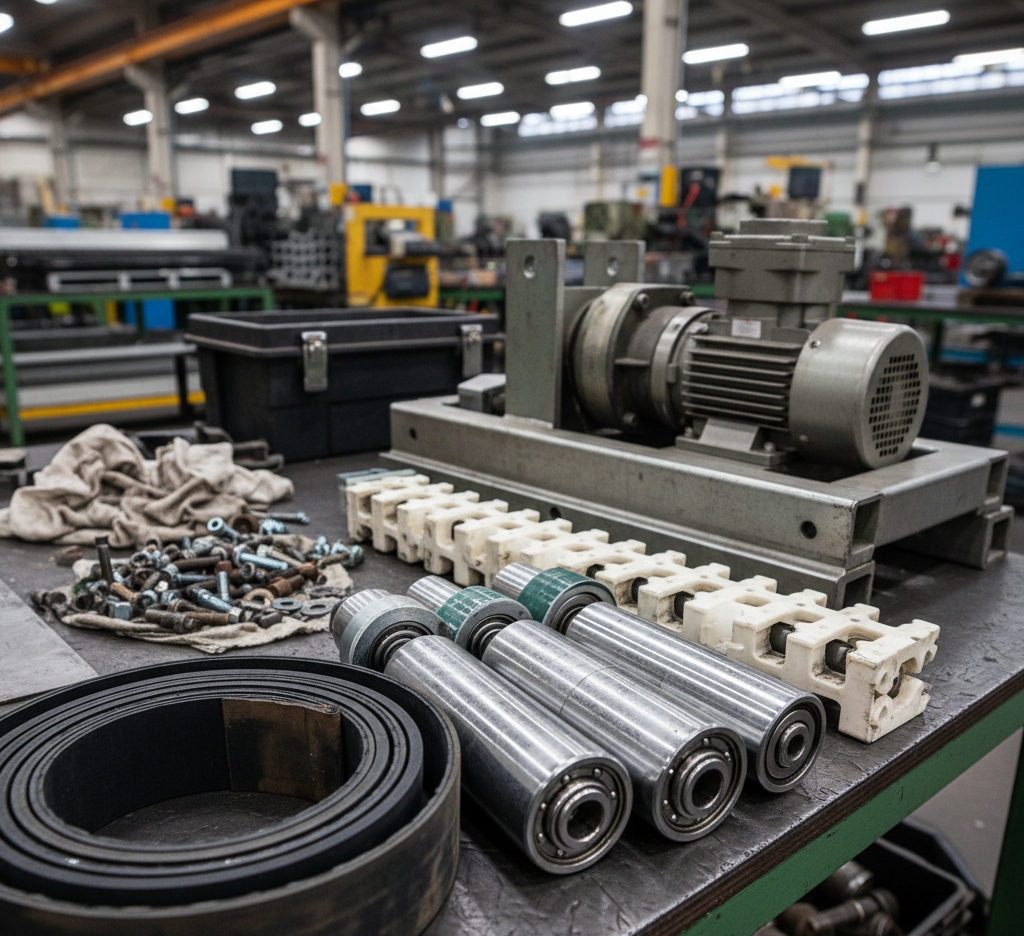
Every efficient production line begins with a foundation built on precision, reliability, and seamless material handling. Conveyor systems serve as the backbone of manufacturing and distribution operations, but their efficiency largely depends on the quality and compatibility of the conveyor components used. Selecting the right elements ensures smooth movement, minimal downtime, and optimized throughput across various industries, including food processing, packaging, and automotive assembly.
Not all conveyor systems are created equal—each industry demands tailored functionality and durability. A well-designed conveyor equipped with the right conveyor belt parts can significantly improve operational flow and reduce maintenance costs. Selecting components that match an application’s load type, environmental conditions, and hygiene requirements is crucial for achieving consistent performance and maintaining product integrity.
Understanding the Industry’s Material Handling Needs
Each industry faces unique challenges when it comes to material flow. Food and beverage manufacturers prioritize hygiene and washdown compatibility, while the automotive sector focuses on load-bearing strength and precision handling. Similarly, the pharmaceutical and electronics industries require components that are static-free and resistant to contamination. Identifying these operational requirements is the first step toward configuring a conveyor system that supports long-term reliability and safety.
Key Conveyor Components and Their Role in System Performance
A conveyor’s performance is only as strong as the components within it. Core conveyor components, including pulleys, rollers, bearings, belts, and drives, must function cohesively to ensure maximum uptime and smooth operation.
- Belts: Responsible for the actual transport of materials; material choice (PVC, modular plastic, or stainless steel) depends on the application.
- Rollers and Idlers: Support the belt and load, influencing smoothness and noise levels.
- Drives and Motors: Provide motion and speed control essential for consistent throughput.
- Frames and Supports: Maintain system alignment and stability.
- Bearings and Tensioners: Ensure optimal belt tracking and reduce wear.
Each element contributes to the conveyor’s overall durability, energy efficiency, and maintenance needs.
Matching Conveyor Components to Specific Industries
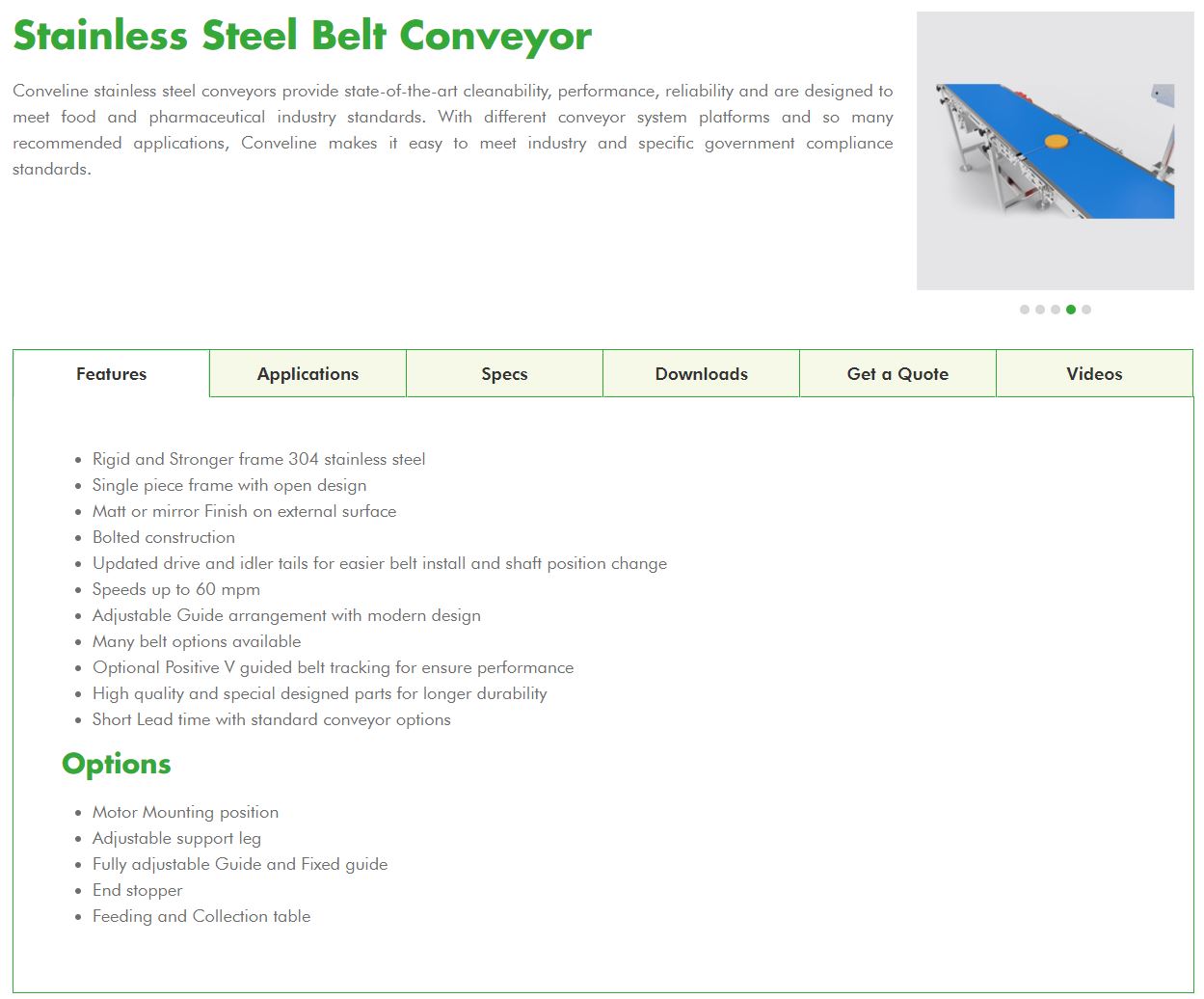
Conveyor systems must be designed around industry-specific demands. In the food processing sector, stainless steel frames and modular plastic belts resist corrosion and meet sanitation standards. The packaging and logistics industry benefits from flexible modular conveyors that handle variable product sizes with ease. Heavy-duty industrial manufacturing applications require reinforced belts, durable pulleys, and high-torque drives for continuous, load-intensive operations.
Selecting materials and designs that align with these unique requirements ensures dependable system performance and extended equipment life.
Design Considerations Before Selecting Conveyor Components
Before finalizing a system, engineers must evaluate several design factors that influence the selection of conveyor components:
- Load Type and Weight: Determines belt material and drive capacity.
- Operating Environment: Temperature, moisture, or exposure to chemicals affects component durability.
- Speed and Throughput: Impacts drive selection and belt configuration.
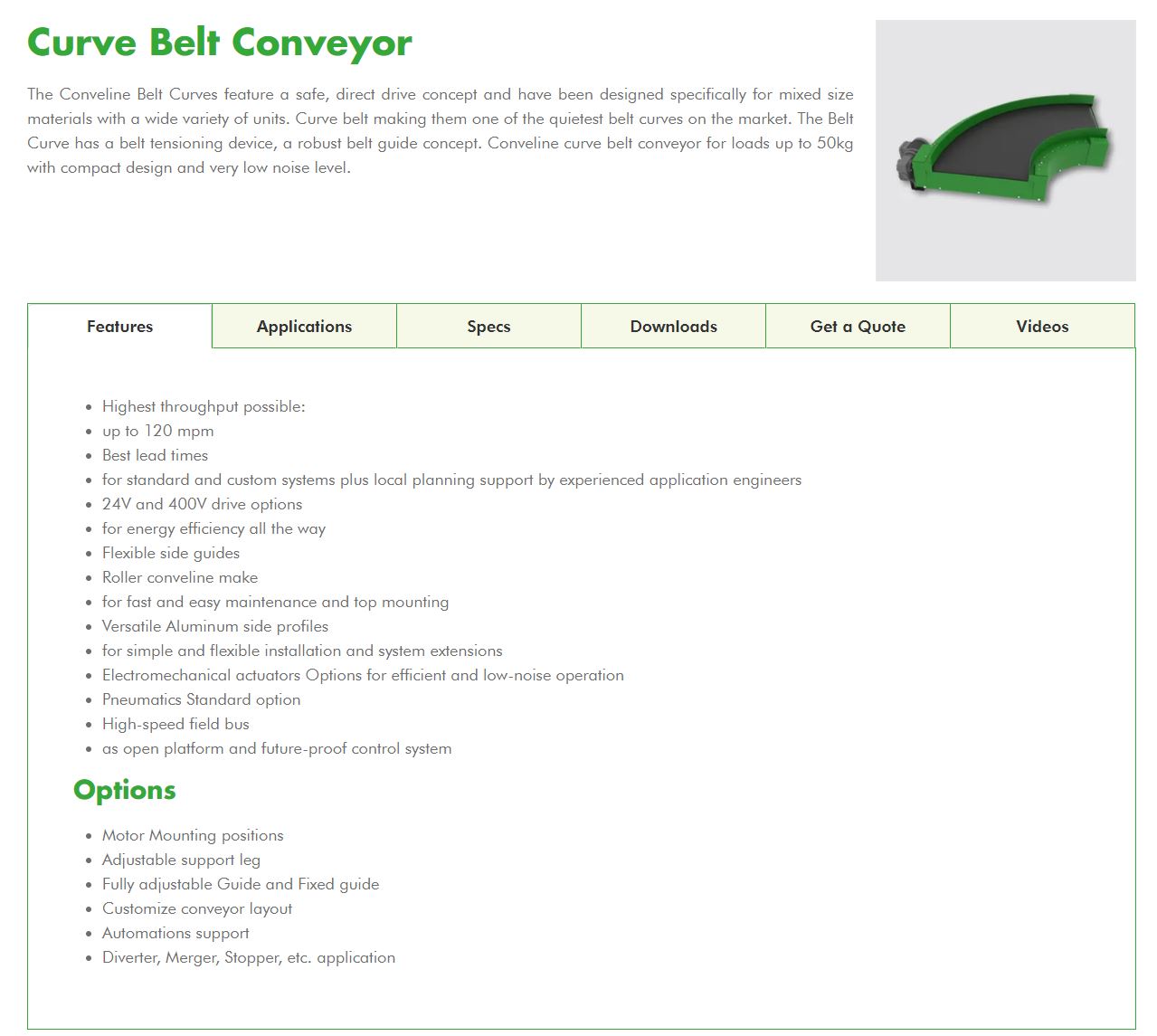
- Space Constraints: Influence conveyor width, length, and curvature options.
- Maintenance Accessibility: Ensures easy inspection and replacement of parts.
A comprehensive design assessment minimizes future operational issues and promotes efficiency.
Compliance and Safety Standards to Keep in Mind
Safety and compliance are non-negotiable in modern conveyor design. Components must adhere to relevant industry standards such as FDA and USDA guidelines for food-grade systems or ISO and CE certifications for industrial applications. Proper guarding, emergency stops, and anti-slip belt surfaces contribute to workplace safety. Additionally, selecting certified materials guarantees compatibility with local and international regulations, ensuring long-term reliability and legal compliance.
Partnering with the Right Conveyor Components Manufacturer
A trusted conveyor components manufacturer plays a vital role in ensuring system reliability and compatibility. Manufacturers like Conovey provide engineered components designed to withstand rigorous industrial demands. Their precision-built systems are customized to meet specific application needs, from sanitary conveyors for food environments to modular transfer systems for high-speed packaging lines. Partnering with a manufacturer that prioritizes quality control, material traceability, and technical support ensures consistent system performance and minimized downtime.
Optimize Performance with Industry-Specific Conveyor Components
The effectiveness of any conveyor system depends on the harmony between design, environment, and component selection. Choosing the right conveyor parts enhances productivity, ensures regulatory compliance, and reduces maintenance-related disruptions. Conovey delivers industry-focused conveyor solutions engineered for lasting performance and operational precision.
Contact Conovey today to learn more about custom conveyor systems and high-performance components built to optimize material handling for any industry application.


- Various Drive Options
- Tapered Rollers also available
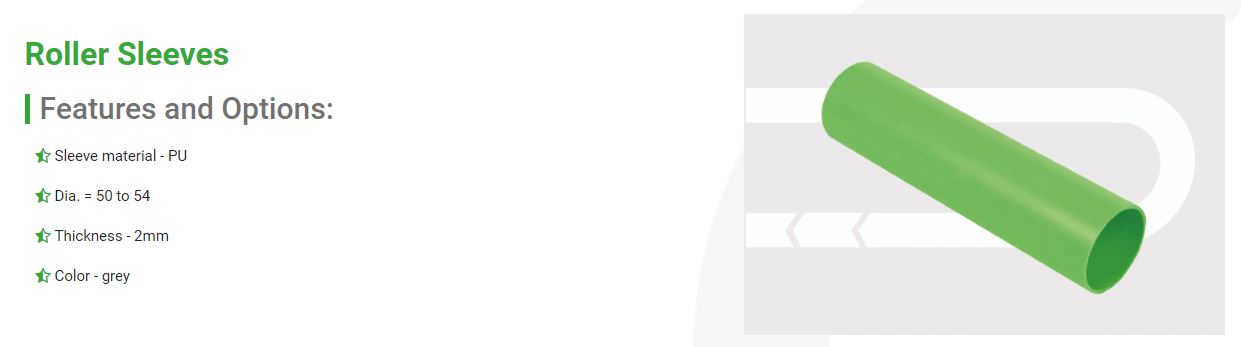
- Optional Polyurethane sleeving
- Variable speed is standard
- Safe low voltage & wide range of speeds
- 1201/1202 | Belt Rollers, Single or Double Groove Light/Medium Duty Conveyors Rollers, Custom Made Grooves | ⌀50mm Roller | ⌀11mm, ⌀14mm Shafts
- 1203 | Belt Pulley Rollers, Light/Medium Duty Conveyor Rollers | ⌀50mm Roller | ⌀11mm, ⌀14mm Shafts
- Suitable for wide range of application for Buffer or accumulation require
- Single drive with start/stop application suitable
- Single or double 14 teeth x 1/2” sprockets can be fitted (choice of steel or nylon sprockets)
- Mild steel and stainless steel options
- Stainless steel options available for all fixed driven conveyor rollers
- 1301/1302 | Polymer sprocket rollers, single or double sprocket, low running noise, polyamide bearing housing | 50mm Dia | ⌀14mm Shaft
- 1303/1304 | Steel sprocket, single or double sprocket, polyamide bearing housing | ⌀50mm Roller | ⌀14mm Shafts
- 1305/1306 | Steel sprocket, adjustable torque, single or double sprocket, polyamide/steel bearing housing | ⌀50mm, ⌀60mm, ⌀76 mm Rollers | ⌀14mm, ⌀15mm, ⌀20mm Shafts
- 1201/1202 | belt rollers, single or double groove light/medium duty conveyor rollers, custom made groove | ⌀50mm Roller | ⌀11mm, ⌀14mm Shafts
- 1203 | Belt Pulley Rollers, Light/Medium Duty Conveyor Rollers | ⌀50mm Roller | ⌀11mm, ⌀14mm Shafts
- Single and Double Grooves option
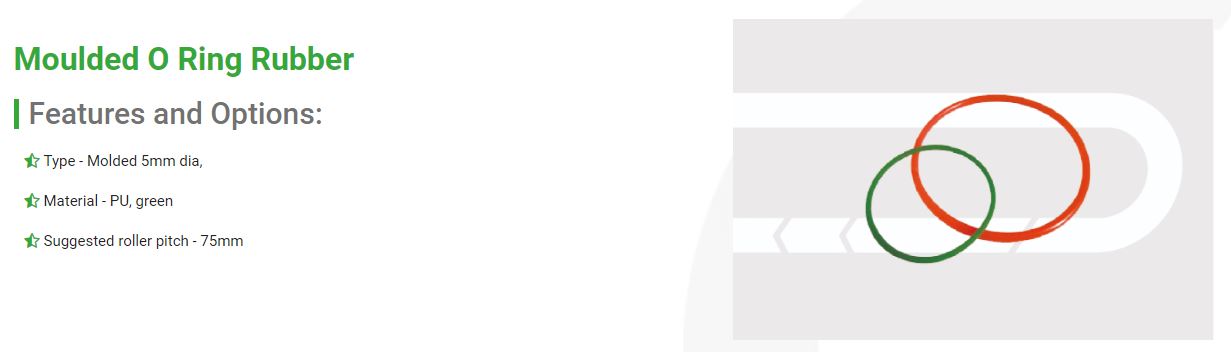
- Light and medium duty driven roller fitter with nylon O ring sprocket
- Line-shaft and 24V DC motorized rollers conveyors
- Mild steel, stainless steel and plastic options
- Stainless steel options available for all fixed driven conveyor rollers
- Free running bearings
- Wide range of tube and shaft options
- Wide range to handle from 100gm to 500kg per roller capacity
- Mild steel, stainless steel and plastic options
- Our most economical price rollers
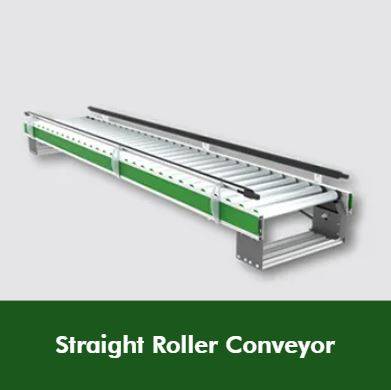
- 1101 | PVC tube, polyamide bearing housing, light duty conveyor rollers | ⌀25mm, ⌀38mm, ⌀50mm Rollers | ⌀10mm, ⌀12mm Shafts
- 1102 | Light and medium duty universal conveyor rollers, polyamide bearing housing | ⌀25mm, ⌀38mm, ⌀50mm, ⌀76mm, ⌀89mm Rollers | ⌀14mm, ⌀20mm Shafts
- 1103 | Gravity conveyor rollers, steel bearing housing | ⌀50mm, ⌀76mm, ⌀89mm Rollers | ⌀14mm, ⌀20mm Shafts
- 1201/1202 | belt rollers, single or double groove light/medium duty conveyor rollers, custom made groove | ⌀50mm Roller | ⌀11mm, ⌀14mm Shafts
- 1203 | Belt Pulley Rollers, Light/Medium Duty Conveyor Rollers | ⌀50mm Roller | ⌀11mm, ⌀14mm Shafts
- 1204 | Poly V belt pulley rollers, medium duty and high speed conveyor rollers | ⌀50mm Roller | ⌀11mm, ⌀14mm Shafts
- 1205 | Timing belt pulley rollers, medium duty and high speed conveyor rollers | ⌀50mm Roller | ⌀11mm, ⌀14mm Shafts
- 1206/1207 | Polymer sprocket rollers, single or double sprocket, medium duty and low running noise, polyamide bearing housing | ⌀50mm Roller | ⌀14mm Shafts
- 1208/1209 | Steel sprocket, single or double sprocket, medium/heavy duty conveying application, polyamide bearing housing | ⌀50mm, ⌀60mm, ⌀76mm Rollers, ⌀89mm Roller | ⌀14mm, ⌀15mm, ⌀20mm Shafts
- 1210/1211 | Steel sprocket, steel bearing housing, heavy duty conveying, strong and reliable | ⌀50mm, ⌀76mm, ⌀89mm Rollers | ⌀14mm, ⌀15mm, ⌀20mm Shafts
- Free running option for gravity roller conveyors.
- All tapered conveyor rollers have a sealed bearing option for wash-down areas
- 50mm diameter base roller can be grooved for line-shaft conveyors
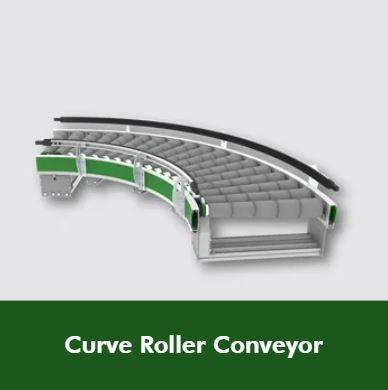
- Tapered sleeve rollers to suits an inside radius of 500mm to 1200mm
- Single or double 14 teeth x 1/2” sprockets can be fitted (choice of steel or nylon sprockets)
- Mild steel and stainless steel options
- Stainless steel options available for all fixed driven conveyor rollers
- 1401 | Gravity tapered roller, attractive look and low noise | ⌀53mm, ⌀56mm, ⌀50mm Rollers | ⌀12mm, ⌀14mm Shafts
- 1402 | belt drive, Double grooved tapered sleeve roller, customized groove position | ⌀53mm, ⌀56mm, ⌀50mm Rollers | ⌀14mm Shaft
- 1403 | belt pulley drive, Double grooved O belt pulley tapered sleeve roller | ⌀53mm, ⌀56mm, ⌀50mm Rollers | ⌀14mm Shaft
- 1404 | Poly vee belt pulley drive tapered sleeve roller, high speed, low noise | ⌀53mm, ⌀56mm, ⌀50mm Rollers | ⌀14mm Shaft
- 1405 | Polymer sprocket drive tapered sleeve roller, medium duty, low noise | ⌀53mm, ⌀56mm, ⌀50mm Rollers | ⌀14mm Shaft
- Widths | 250mm, 350mm, 450mm, 650mm, 850mm |
- Lengths | 500mm, 1000mm, 1500mm, 2000mm, 2500mm |
- Max Pallet/Carrier Wgt (kg) | 50kg/250kg |
- Pallet Sizes | 238X306, 332X430, 428X550, 522X670 |
- Height Range | 500mm - 1000mm |
- Load Accuracy | +/-0.5mm Stop Unit | +/-0.1mm Locating Pin | +/-.05mm Lift & Locate |
- Roller Pitch | 82.5mm, 127mm, 150.8mm |
- Roller ⌀ | 50mm, 76mm |
- Max Length per Drive | 7500mm |
- Drive Motor Size | .5HP, 1HP | SEW |
- Drive Speeds | 2-24 mpm
- Frame Materials | Aluminum or Powder Coat Mild Steel
- High energy efficiency level with different load application
- Safe, affordable operation without the need for guarding
- Tight positioning tolerances thanks to high precision guide rails
- Active braking and lifting of the Pallets
- Unlimited zero pressure accumulation of Pallets
- Flexible speeds from 0.2 to 24m/min between communication points
- Constant 24V auxiliary power available for energy Saving
- Very limited preventative maintenance required
- No track maintenance due to no moving parts in the track
- Very low noise level, less than 60db(A)
- Easy tracking of the Carts/parts throughout the layout
- Highly standardized components
- Significantly reduced wiring and commissioning time
- Low profile for easy part access around the line
- Tip protection for overhanging loads optionally available
- Adaptable pallet length to fit the size of your part