Key Differences Between Food Processing Conveyors and General Industrial Conveyors

Understanding the Interaction Between Belt Conveyor Parts and Drive Systems
February 2, 2026
How to Choose the Best Custom-Built Conveyors Suppliers in Ontario
February 10, 2026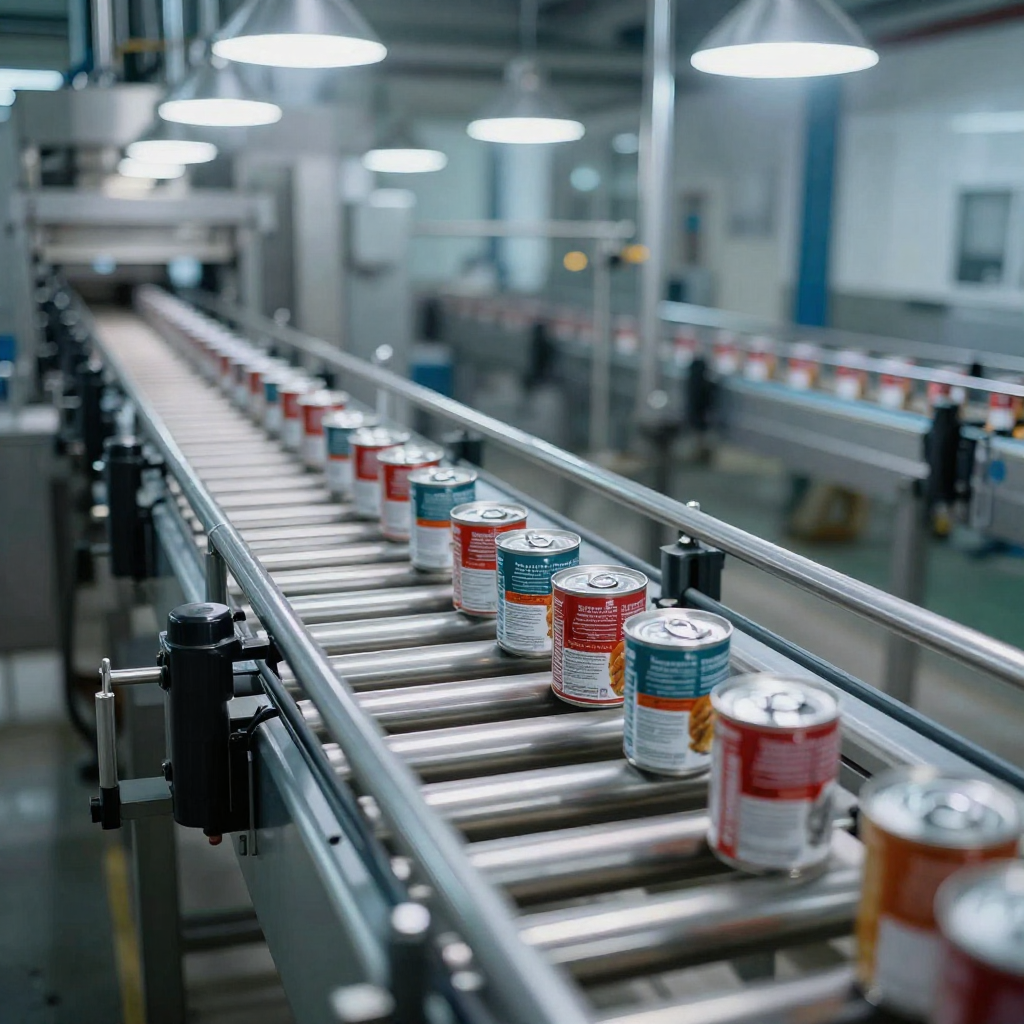
Modern production lines rely heavily on conveyors, yet not all conveyor systems are engineered with the same priorities. Facilities handling raw ingredients, packaged food, or ready-to-eat products operate under a very different set of constraints from plants that move pallets, parts, or bulk materials. This is where the distinction between food-grade systems and general industrial conveyors becomes critical, and where food conveyor manufacturers play a specialized role in meeting strict operational demands.
While both conveyor types move products from one point to another, their designs reflect the environments they serve. Factors such as hygiene, material compatibility, washdown frequency, and regulatory oversight shape food-focused systems in ways that industrial conveyors are not required to address. Understanding these differences helps operations avoid costly mismatches between equipment design and production reality.
People Also Ask
1. What makes food processing conveyors different from industrial conveyors?
Food conveyors are designed for sanitation, food-safe materials, and regulatory compliance, while industrial conveyors prioritize durability and throughput.
2. Can industrial conveyors be used in food processing facilities?
Industrial conveyors are generally unsuitable for food environments due to material selection, limited cleanability, and lack of food-safety compliance.
Defining Food Processing Conveyors vs General Industrial Conveyors
Food processing conveyors are engineered specifically to handle edible products throughout the preparation, processing, and packaging stages. These systems prioritize hygiene, contamination prevention, and repeatable sanitation.
General industrial conveyors are designed for durability and throughput in environments such as manufacturing, warehousing, mining, or assembly operations. Cleanability and food safety are not primary design drivers for these systems.
1. Primary Purpose and Operating Environment
Food conveyors operate in environments exposed to moisture, temperature variation, oils, fats, and food residue. Frequent washdowns and chemical cleaning are part of the daily operation.
Industrial conveyors typically run in dry or controlled environments where exposure to contaminants is minimal. Their primary purpose is efficient material movement rather than sanitation control.
2. Material Selection and Construction Differences
Food conveyor frames are commonly built from stainless steel or corrosion-resistant alloys. Welds are ground smooth, and hollow structures are avoided to reduce bacterial harborage points.
Industrial conveyors often use painted carbon steel or aluminum. Structural strength and cost efficiency take precedence over hygienic design.
3. Sanitation and Cleanability Requirements
Sanitation is a defining difference. Food systems are designed for rapid and thorough cleaning, often supporting clean-in-place or washdown procedures.
General industrial conveyors may require only periodic cleaning to remove debris, with no need to meet sanitation validation standards.
4. Belt Types and Surface Design
Food processing conveyor belts are manufactured from materials approved for food contact, including polyurethane, modular plastics, or specialty rubber compounds. Belt surfaces are smooth or textured to balance grip and cleanability.
Industrial belts may use heavy rubber, fabric-reinforced materials, or metal surfaces optimized for abrasion resistance rather than hygiene.
5. Design Standards and Compliance Expectations
Food conveyors must align with FDA, USDA, and other applicable food safety guidelines depending on the market and product type. Design audits and documentation are common.
Industrial conveyors are governed primarily by mechanical safety and performance standards, with limited regulatory oversight related to hygiene.
6. Drive Systems and Component Protection
A food belt conveyor often features sealed bearings, washdown-rated motors, and protected drive components to prevent water and chemical ingress.
Industrial systems may use open drives and standard bearings, as exposure to aggressive cleaning agents is not expected.
7. Maintenance and Downtime Considerations
Food facilities schedule maintenance around sanitation cycles and production windows. Components are selected for quick removal and reinstallation to reduce downtime.
Industrial conveyors may tolerate longer maintenance intervals and extended shutdowns without compromising product safety.
8. Customization and System Flexibility
Food processing lines often require tailored layouts, integrated inspection points, and precise product-handling features.
Industrial conveyors prioritize modularity and load flexibility over product-specific handling.
9. Cost Structure and Lifecycle Investment
Food-grade systems often carry higher upfront costs due to materials, design complexity, and compliance requirements. However, these costs are offset by reduced risk of contamination and regulatory exposure.
Industrial conveyors typically offer lower initial investment with longer mechanical life in non-sanitary environments.
Common Mistakes When Comparing Conveyor Types
A frequent error is assuming industrial conveyors can be adapted for food use with minor modifications. This approach often leads to sanitation failures, compliance issues, and shortened equipment life.
Choosing the Right Conveyor for Your Application
Selecting the correct system begins with understanding product characteristics, cleaning protocols, and regulatory obligations. Conveyor design must reflect operational reality rather than surface-level similarities.
Matching Conveyor Design to Operational Reality
Food and industrial conveyors serve fundamentally different purposes, even when their basic function appears similar. Aligning design, materials, and maintenance strategies with production requirements protects both efficiency and compliance. Conovey delivers engineered conveyor solutions that reflect these distinctions, supporting hygienic design, reliability, and long-term performance across demanding applications.
Contact us today to ensure the right system is in place for food operations that depend on a compliant, reliable food packaging conveyor.


- Various Drive Options
- Tapered Rollers also available
- Optional Polyurethane sleeving
- Variable speed is standard
- Safe low voltage & wide range of speeds
- 1201/1202 | Belt Rollers, Single or Double Groove Light/Medium Duty Conveyors Rollers, Custom Made Grooves | ⌀50mm Roller | ⌀11mm, ⌀14mm Shafts
- 1203 | Belt Pulley Rollers, Light/Medium Duty Conveyor Rollers | ⌀50mm Roller | ⌀11mm, ⌀14mm Shafts
- Suitable for wide range of application for Buffer or accumulation require
- Single drive with start/stop application suitable
- Single or double 14 teeth x 1/2” sprockets can be fitted (choice of steel or nylon sprockets)
- Mild steel and stainless steel options
- Stainless steel options available for all fixed driven conveyor rollers
- 1301/1302 | Polymer sprocket rollers, single or double sprocket, low running noise, polyamide bearing housing | 50mm Dia | ⌀14mm Shaft
- 1303/1304 | Steel sprocket, single or double sprocket, polyamide bearing housing | ⌀50mm Roller | ⌀14mm Shafts
- 1305/1306 | Steel sprocket, adjustable torque, single or double sprocket, polyamide/steel bearing housing | ⌀50mm, ⌀60mm, ⌀76 mm Rollers | ⌀14mm, ⌀15mm, ⌀20mm Shafts
- 1201/1202 | belt rollers, single or double groove light/medium duty conveyor rollers, custom made groove | ⌀50mm Roller | ⌀11mm, ⌀14mm Shafts
- 1203 | Belt Pulley Rollers, Light/Medium Duty Conveyor Rollers | ⌀50mm Roller | ⌀11mm, ⌀14mm Shafts
- Single and Double Grooves option
- Light and medium duty driven roller fitter with nylon O ring sprocket
- Line-shaft and 24V DC motorized rollers conveyors
- Mild steel, stainless steel and plastic options
- Stainless steel options available for all fixed driven conveyor rollers
- Free running bearings
- Wide range of tube and shaft options
- Wide range to handle from 100gm to 500kg per roller capacity
- Mild steel, stainless steel and plastic options
- Our most economical price rollers
- 1101 | PVC tube, polyamide bearing housing, light duty conveyor rollers | ⌀25mm, ⌀38mm, ⌀50mm Rollers | ⌀10mm, ⌀12mm Shafts
- 1102 | Light and medium duty universal conveyor rollers, polyamide bearing housing | ⌀25mm, ⌀38mm, ⌀50mm, ⌀76mm, ⌀89mm Rollers | ⌀14mm, ⌀20mm Shafts
- 1103 | Gravity conveyor rollers, steel bearing housing | ⌀50mm, ⌀76mm, ⌀89mm Rollers | ⌀14mm, ⌀20mm Shafts
- 1201/1202 | belt rollers, single or double groove light/medium duty conveyor rollers, custom made groove | ⌀50mm Roller | ⌀11mm, ⌀14mm Shafts
- 1203 | Belt Pulley Rollers, Light/Medium Duty Conveyor Rollers | ⌀50mm Roller | ⌀11mm, ⌀14mm Shafts
- 1204 | Poly V belt pulley rollers, medium duty and high speed conveyor rollers | ⌀50mm Roller | ⌀11mm, ⌀14mm Shafts
- 1205 | Timing belt pulley rollers, medium duty and high speed conveyor rollers | ⌀50mm Roller | ⌀11mm, ⌀14mm Shafts
- 1206/1207 | Polymer sprocket rollers, single or double sprocket, medium duty and low running noise, polyamide bearing housing | ⌀50mm Roller | ⌀14mm Shafts
- 1208/1209 | Steel sprocket, single or double sprocket, medium/heavy duty conveying application, polyamide bearing housing | ⌀50mm, ⌀60mm, ⌀76mm Rollers, ⌀89mm Roller | ⌀14mm, ⌀15mm, ⌀20mm Shafts
- 1210/1211 | Steel sprocket, steel bearing housing, heavy duty conveying, strong and reliable | ⌀50mm, ⌀76mm, ⌀89mm Rollers | ⌀14mm, ⌀15mm, ⌀20mm Shafts
- Free running option for gravity roller conveyors.
- All tapered conveyor rollers have a sealed bearing option for wash-down areas
- 50mm diameter base roller can be grooved for line-shaft conveyors
- Tapered sleeve rollers to suits an inside radius of 500mm to 1200mm
- Single or double 14 teeth x 1/2” sprockets can be fitted (choice of steel or nylon sprockets)
- Mild steel and stainless steel options
- Stainless steel options available for all fixed driven conveyor rollers
- 1401 | Gravity tapered roller, attractive look and low noise | ⌀53mm, ⌀56mm, ⌀50mm Rollers | ⌀12mm, ⌀14mm Shafts
- 1402 | belt drive, Double grooved tapered sleeve roller, customized groove position | ⌀53mm, ⌀56mm, ⌀50mm Rollers | ⌀14mm Shaft
- 1403 | belt pulley drive, Double grooved O belt pulley tapered sleeve roller | ⌀53mm, ⌀56mm, ⌀50mm Rollers | ⌀14mm Shaft
- 1404 | Poly vee belt pulley drive tapered sleeve roller, high speed, low noise | ⌀53mm, ⌀56mm, ⌀50mm Rollers | ⌀14mm Shaft
- 1405 | Polymer sprocket drive tapered sleeve roller, medium duty, low noise | ⌀53mm, ⌀56mm, ⌀50mm Rollers | ⌀14mm Shaft
- Widths | 250mm, 350mm, 450mm, 650mm, 850mm |
- Lengths | 500mm, 1000mm, 1500mm, 2000mm, 2500mm |
- Max Pallet/Carrier Wgt (kg) | 50kg/250kg |
- Pallet Sizes | 238X306, 332X430, 428X550, 522X670 |
- Height Range | 500mm - 1000mm |
- Load Accuracy | +/-0.5mm Stop Unit | +/-0.1mm Locating Pin | +/-.05mm Lift & Locate |
- Roller Pitch | 82.5mm, 127mm, 150.8mm |
- Roller ⌀ | 50mm, 76mm |
- Max Length per Drive | 7500mm |
- Drive Motor Size | .5HP, 1HP | SEW |
- Drive Speeds | 2-24 mpm
- Frame Materials | Aluminum or Powder Coat Mild Steel
- High energy efficiency level with different load application
- Safe, affordable operation without the need for guarding
- Tight positioning tolerances thanks to high precision guide rails
- Active braking and lifting of the Pallets
- Unlimited zero pressure accumulation of Pallets
- Flexible speeds from 0.2 to 24m/min between communication points
- Constant 24V auxiliary power available for energy Saving
- Very limited preventative maintenance required
- No track maintenance due to no moving parts in the track
- Very low noise level, less than 60db(A)
- Easy tracking of the Carts/parts throughout the layout
- Highly standardized components
- Significantly reduced wiring and commissioning time
- Low profile for easy part access around the line
- Tip protection for overhanging loads optionally available
- Adaptable pallet length to fit the size of your part