How Sanitary Food Packaging Conveyors Prevent Cross-Contamination

Flat Belt Conveyor vs. Retractable Conveyor: Which Delivers Better Throughput?
December 4, 2025
Common Spiral Conveyor Belt Failures and How Proper Design Prevents Them
December 10, 2025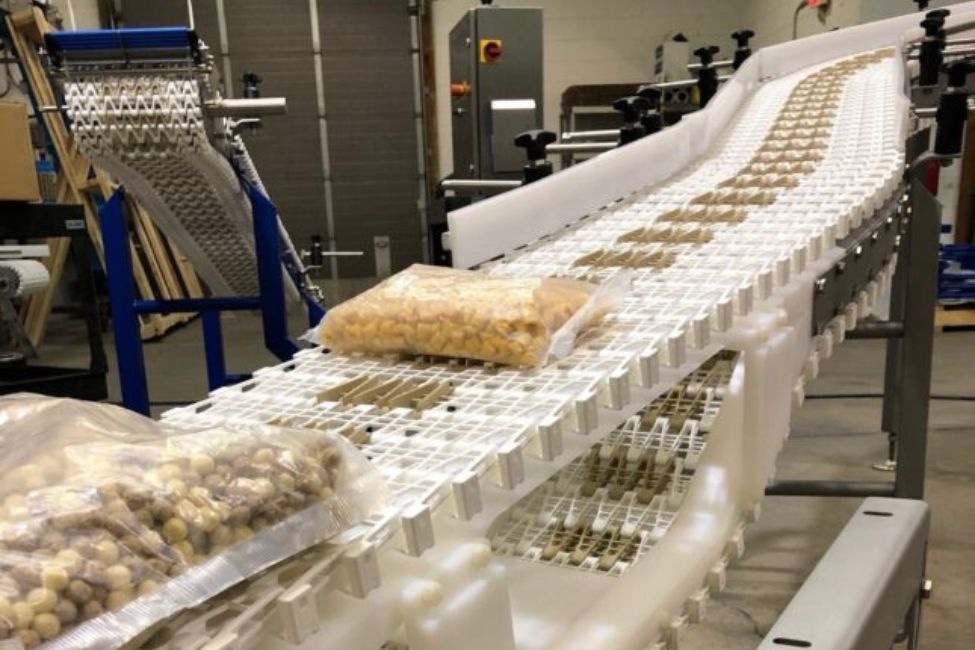
Food safety begins long before products reach the consumer. Every stage of processing and packaging must be designed to protect against contamination, especially when materials move across production lines at high speeds. Equipment designed by trusted food conveyor manufacturers plays a vital role in maintaining hygienic conditions, reducing risks, and ensuring consistent food quality.
Cross-contamination can occur when allergens, microbes, or foreign materials transfer from one batch or product type to another. Sanitary conveyors are engineered to prevent these risks through hygienic materials, open-frame construction, easy-access cleaning features, and compliance with strict food safety regulations.
Understanding Cross-Contamination Risks in Conveyor Systems
Conveyor systems come into direct contact with ingredients, packaging materials, and finished goods. Without proper design, residues can build up on belts, frames, or drive components. Moisture accumulation, trapped debris, and poor airflow can create environments where bacteria multiply. For processors using conveyors for food processing, contamination risks may also arise from:
- Allergen carryover
- Raw-to-ready product transfer
- Improper cleaning between production shifts
- Damaged or worn conveyor parts
Each of these factors can compromise product safety, underscoring the importance of sanitary conveyor design.
What Makes a Conveyor “Sanitary” in Food Packaging?
A sanitary conveyor is designed to minimize contamination risks by eliminating hidden surfaces, reducing moisture retention, and ensuring full washdown capability. The system must support frequent cleaning cycles without degrading in performance or structural integrity. Key characteristics include smooth surfaces, FDA-compliant materials, corrosion-resistant frames, and tool-free disassembly for rapid sanitation.
Key Sanitary Features That Prevent Cross-Contamination
Modern sanitary conveyors incorporate advanced hygiene-focused features to prevent contamination:
- Open-frame construction: Removes enclosed spaces where debris could accumulate.
- Self-draining designs: Prevent water pooling after washdowns.
- Rounded edges and smooth welds: Reduce areas where residue can cling.
- Quick-release belt mechanisms: Allow fast belt removal for thorough cleaning.
- Integrated CIP systems: Automated cleaning technology ensures consistent sanitation across shifts.
These features work together to keep production lines clean and compliant, protecting product integrity from start to finish.
Role of Conveyor Materials and Belt Design in Hygiene Control
Materials used in a food industry conveyor must be food-safe, non-porous, and resistant to chemicals and temperature variations. Common hygienic materials include stainless steel, polyurethane, modular plastic, and FDA-approved thermoplastics.
Belt design also has a significant impact on contamination control:
- Non-porous belts reduce bacterial growth.
- Positive-drive belts eliminate crevices found in traditional friction-driven belts.
- Modular belts allow airflow, making them ideal for cooling processes.
- Perforated belts support drainage during washdowns or moisture-heavy applications.
The right combination of materials and belt design can significantly reduce contamination risks across packaging and processing lines.
Sanitation Protocols and Compliance Standards
Sanitary conveyors must adhere to strict regulatory guidelines to ensure food safety. These standards include:
- FDA regulations for food-contact materials
- USDA sanitation requirements
- HACCP and HARPC compliance for hazard prevention and risk management
- 3-A and NSF guidelines for hygienic design
Following these standards helps facilities maintain consistent product quality while avoiding costly recalls or compliance violations.
Integration with Food Processing and Packaging Lines
Sanitary conveyors must integrate seamlessly into broader food processing layouts. Whether handling raw ingredients, baked goods, frozen items, or packaged products, conveyors must support controlled movement and separation of product types. Smooth transfers, minimal product handling, and allergen-specific conveyor lanes further reduce cross-contamination risks.
Maintenance and Cleaning Best Practices
Even with a hygienic design, proper maintenance is essential. Cleaning practices should include:
- Daily washdowns with approved sanitizers
- Routine inspection of belts, pulleys, and frames
- Verification of cleaning effectiveness
- Scheduled component replacement to prevent contamination from wear
Effective cleaning reduces bacterial growth, ensures regulatory compliance, and extends equipment lifespan.
The Role of Leading Food Conveyor Manufacturers
Top food conveyor manufacturers design solutions tailored for the unique hygiene needs of food processors. Their systems focus on durability, food-safe materials, and user-friendly cleaning features. By incorporating feedback from food facilities and adhering to global standards, they deliver conveyors that support both safety and efficiency in high-demand environments.
Investing in Sanitary Conveyor Design for Food Safety and Brand Trust
A hygienic, well-engineered food packaging conveyor is essential for preventing cross-contamination and maintaining consistent product quality. Sanitary design, proper maintenance, and compliance-focused engineering ensure processors meet safety expectations while protecting brand reputation. Conovey delivers food-safe conveyor solutions designed to reduce contamination risks, simplify sanitation, and support efficient processing.
Contact Conovey today to learn more about sanitary conveyor systems engineered for safe, reliable performance across the food industry.


- Various Drive Options
- Tapered Rollers also available
- Optional Polyurethane sleeving
- Variable speed is standard
- Safe low voltage & wide range of speeds
- 1201/1202 | Belt Rollers, Single or Double Groove Light/Medium Duty Conveyors Rollers, Custom Made Grooves | ⌀50mm Roller | ⌀11mm, ⌀14mm Shafts
- 1203 | Belt Pulley Rollers, Light/Medium Duty Conveyor Rollers | ⌀50mm Roller | ⌀11mm, ⌀14mm Shafts
- Suitable for wide range of application for Buffer or accumulation require
- Single drive with start/stop application suitable
- Single or double 14 teeth x 1/2” sprockets can be fitted (choice of steel or nylon sprockets)
- Mild steel and stainless steel options
- Stainless steel options available for all fixed driven conveyor rollers
- 1301/1302 | Polymer sprocket rollers, single or double sprocket, low running noise, polyamide bearing housing | 50mm Dia | ⌀14mm Shaft
- 1303/1304 | Steel sprocket, single or double sprocket, polyamide bearing housing | ⌀50mm Roller | ⌀14mm Shafts
- 1305/1306 | Steel sprocket, adjustable torque, single or double sprocket, polyamide/steel bearing housing | ⌀50mm, ⌀60mm, ⌀76 mm Rollers | ⌀14mm, ⌀15mm, ⌀20mm Shafts
- 1201/1202 | belt rollers, single or double groove light/medium duty conveyor rollers, custom made groove | ⌀50mm Roller | ⌀11mm, ⌀14mm Shafts
- 1203 | Belt Pulley Rollers, Light/Medium Duty Conveyor Rollers | ⌀50mm Roller | ⌀11mm, ⌀14mm Shafts
- Single and Double Grooves option
- Light and medium duty driven roller fitter with nylon O ring sprocket
- Line-shaft and 24V DC motorized rollers conveyors
- Mild steel, stainless steel and plastic options
- Stainless steel options available for all fixed driven conveyor rollers
- Free running bearings
- Wide range of tube and shaft options
- Wide range to handle from 100gm to 500kg per roller capacity
- Mild steel, stainless steel and plastic options
- Our most economical price rollers
- 1101 | PVC tube, polyamide bearing housing, light duty conveyor rollers | ⌀25mm, ⌀38mm, ⌀50mm Rollers | ⌀10mm, ⌀12mm Shafts
- 1102 | Light and medium duty universal conveyor rollers, polyamide bearing housing | ⌀25mm, ⌀38mm, ⌀50mm, ⌀76mm, ⌀89mm Rollers | ⌀14mm, ⌀20mm Shafts
- 1103 | Gravity conveyor rollers, steel bearing housing | ⌀50mm, ⌀76mm, ⌀89mm Rollers | ⌀14mm, ⌀20mm Shafts
- 1201/1202 | belt rollers, single or double groove light/medium duty conveyor rollers, custom made groove | ⌀50mm Roller | ⌀11mm, ⌀14mm Shafts
- 1203 | Belt Pulley Rollers, Light/Medium Duty Conveyor Rollers | ⌀50mm Roller | ⌀11mm, ⌀14mm Shafts
- 1204 | Poly V belt pulley rollers, medium duty and high speed conveyor rollers | ⌀50mm Roller | ⌀11mm, ⌀14mm Shafts
- 1205 | Timing belt pulley rollers, medium duty and high speed conveyor rollers | ⌀50mm Roller | ⌀11mm, ⌀14mm Shafts
- 1206/1207 | Polymer sprocket rollers, single or double sprocket, medium duty and low running noise, polyamide bearing housing | ⌀50mm Roller | ⌀14mm Shafts
- 1208/1209 | Steel sprocket, single or double sprocket, medium/heavy duty conveying application, polyamide bearing housing | ⌀50mm, ⌀60mm, ⌀76mm Rollers, ⌀89mm Roller | ⌀14mm, ⌀15mm, ⌀20mm Shafts
- 1210/1211 | Steel sprocket, steel bearing housing, heavy duty conveying, strong and reliable | ⌀50mm, ⌀76mm, ⌀89mm Rollers | ⌀14mm, ⌀15mm, ⌀20mm Shafts
- Free running option for gravity roller conveyors.
- All tapered conveyor rollers have a sealed bearing option for wash-down areas
- 50mm diameter base roller can be grooved for line-shaft conveyors
- Tapered sleeve rollers to suits an inside radius of 500mm to 1200mm
- Single or double 14 teeth x 1/2” sprockets can be fitted (choice of steel or nylon sprockets)
- Mild steel and stainless steel options
- Stainless steel options available for all fixed driven conveyor rollers
- 1401 | Gravity tapered roller, attractive look and low noise | ⌀53mm, ⌀56mm, ⌀50mm Rollers | ⌀12mm, ⌀14mm Shafts
- 1402 | belt drive, Double grooved tapered sleeve roller, customized groove position | ⌀53mm, ⌀56mm, ⌀50mm Rollers | ⌀14mm Shaft
- 1403 | belt pulley drive, Double grooved O belt pulley tapered sleeve roller | ⌀53mm, ⌀56mm, ⌀50mm Rollers | ⌀14mm Shaft
- 1404 | Poly vee belt pulley drive tapered sleeve roller, high speed, low noise | ⌀53mm, ⌀56mm, ⌀50mm Rollers | ⌀14mm Shaft
- 1405 | Polymer sprocket drive tapered sleeve roller, medium duty, low noise | ⌀53mm, ⌀56mm, ⌀50mm Rollers | ⌀14mm Shaft
- Widths | 250mm, 350mm, 450mm, 650mm, 850mm |
- Lengths | 500mm, 1000mm, 1500mm, 2000mm, 2500mm |
- Max Pallet/Carrier Wgt (kg) | 50kg/250kg |
- Pallet Sizes | 238X306, 332X430, 428X550, 522X670 |
- Height Range | 500mm - 1000mm |
- Load Accuracy | +/-0.5mm Stop Unit | +/-0.1mm Locating Pin | +/-.05mm Lift & Locate |
- Roller Pitch | 82.5mm, 127mm, 150.8mm |
- Roller ⌀ | 50mm, 76mm |
- Max Length per Drive | 7500mm |
- Drive Motor Size | .5HP, 1HP | SEW |
- Drive Speeds | 2-24 mpm
- Frame Materials | Aluminum or Powder Coat Mild Steel
- High energy efficiency level with different load application
- Safe, affordable operation without the need for guarding
- Tight positioning tolerances thanks to high precision guide rails
- Active braking and lifting of the Pallets
- Unlimited zero pressure accumulation of Pallets
- Flexible speeds from 0.2 to 24m/min between communication points
- Constant 24V auxiliary power available for energy Saving
- Very limited preventative maintenance required
- No track maintenance due to no moving parts in the track
- Very low noise level, less than 60db(A)
- Easy tracking of the Carts/parts throughout the layout
- Highly standardized components
- Significantly reduced wiring and commissioning time
- Low profile for easy part access around the line
- Tip protection for overhanging loads optionally available
- Adaptable pallet length to fit the size of your part